




The world is rapidly entering an era in which artificial intelligence (AI) is no longer merely an emerging technology. It is becoming a defining pillar of economic growth, diplomacy, national security, industry, education, and global governance. Just as the ‘industrial revolution’ reshaped the global balance of power in the last century, AI is now redefining leadership, competitiveness, and development in the twenty-first century. Against this backdrop, the establishment of the World Artificial Intelligence Cooperation Organization (WAICO) in Shanghai marks a significant milestone in the evolution of global governance.
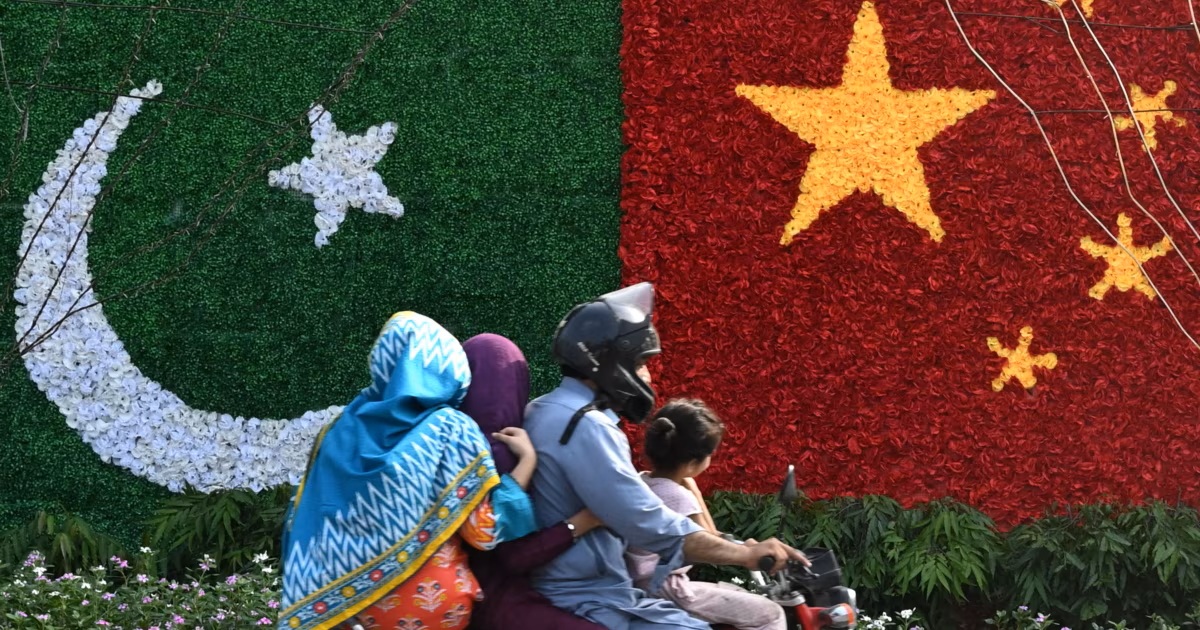
Pakistan’s decision to join the organization as a founding member reflects its intention to participate actively in shaping the future of international AI cooperation. The agreement establishing WAICO was signed in Shanghai by representatives of 29 countries, including Pakistan, in the presence of UN Secretary General Antonio Guterres and senior officials from various governments and international organizations. Representing Pakistan, Deputy Prime Minister and Minister for Foreign Affairs Ishaq Dar signed the agreement, formally making Pakistan one of the organization’s founding members.
According to Ministry of Foreign Affairs in Islamabad, Pakistan reaffirmed its commitment to promoting cooperation in artificial intelligence, strengthening global AI governance, and advancing equitable development, particularly for countries of the Global South. The ministry stated that Pakistan will work alongside fellow member states to bridge the global AI divide, promote fair access to emerging technologies, and ensure that benefits of artificial intelligence are shared more broadly across the developing nations.

The organization, established under China’s leadership, brings together 29 founding member states, including Pakistan, China, Russia, Brazil, Indonesia, Kazakhstan, Belarus, Serbia, Cuba, Venezuela, and Laos. Most of these countries belong to what is commonly referred to as the Global South. It is pertinent to mention here that the Global South is not a geographical concept but rather a political and economic classification that broadly describes developing nations, many of which have faced colonial legacies, limited resources, and lower income levels.
In contrast, the Global North generally refers to advanced industrial economies, including the United States, Canada, European countries, Japan, Australia, and New Zealand. Although China has emerged as one of the world’s leading economic and technological powers, it continues to identify itself as part of the Global South. Under the agreement, WAICO will function as an independent intergovernmental organization with its permanent headquarters in Shanghai. Operating in accordance with the principles of the UN charter, the organization aims to promote consultation, cooperation, mutual benefit, and the responsible development of human-centered artificial intelligence among its member states.
FOUR KEY PRINCIPLES
During the ceremony, China’s Minister for Foreign Affairs Wang Yi signed the agreement on behalf of his government, while representatives from Pakistan, Russia, Indonesia, Kazakhstan, Laos, and other participating countries also signed the document, officially becoming founding members of the organization. The following day, Shanghai hosted the World Artificial Intelligence Conference 2026 (WAIC 2026) and the high-level meeting on global AI governance. Addressing the opening ceremony, China’s President Xi Jinping emphasized that while AI presents unprecedented opportunities for humanity, it also demands robust global governance and responsible regulation.
He outlined four key principles for global AI governance. First, he called for promoting innovation through openness and mutually beneficial cooperation. Second, he stressed the importance of strengthening oversight and risk management to ensure safe and responsible use of AI technologies. Third, he advocated greater inclusiveness and enhanced dialogue among civilizations and societies. Finally, he emphasized the need for a fair and inclusive global governance framework that provides equal opportunities for developing countries and prevents AI from creating new forms of international inequality.
Xi Jinping also announced that China will provide 5,000 AI training opportunities for professionals from developing countries over the next five years. In addition, China plans to establish international AI cooperation centers in partnership with ASEAN, the Arab League, the African Union, the Shanghai Cooperation Organization (SCO), BRICS, and countries in Latin America and the Caribbean. China will also expand the deployment of its “Mazu” intelligent early warning system for weather forecasting to 30 countries.

The conference was also addressed by Kazakh President Kassym-Jomart Tokayev, Cambodian Prime Minister Hun Manet, Acting Thai Prime Minister Anutin Charnvirakul, and the UN secretary-general, all of whom acknowledged China’s growing contribution to global AI governance. For Pakistan, the membership in WAICO represents far more than a diplomatic achievement; it is a strategic opportunity with long-term implications. If Pakistan succeeds in aligning its policies, education system, research, digital infrastructure, and human capital development, it can position itself as credible participant in the ‘fourth industrial revolution’ and secure a meaningful role in the AI economy.
The establishment of the World Artificial Intelligence Cooperation Organization signals a broader transformation in the international order. The future of global leadership will no longer be determined solely by economic strength or military power, but increasingly by knowledge, innovation, scientific research, and responsible governance of emerging technologies. Pakistan has secured its place at the beginning of this new journey. The real challenge, however, lies in translating this diplomatic milestone into effective policies, stronger research institutions, technological innovation, and industrial modernization.
The nations that will lead tomorrow are those that embrace artificial intelligence not simply as a technological advancement, but as a strategic driver of economic prosperity, national resilience, and global influence. The message emerging from Shanghai is both timely and unmistakable: the future is not something to be awaited—it is something to be shaped through vision, investment, innovation, and informed leadership.