

Parliamentarians, legal experts, civil society representatives and human rights advocates during a policy dialogue in Lahore have called for effective legislation and stronger institutional safeguards to protect religious minority girls from forced conversion, abduction and forced marriage, stressing the need for a comprehensive and rights-based response to the continuing vulnerability of minor girls.
The call was made during the policy dialogue organized by the Parliamentarians Commission for Human Rights (PCHR), where participants examined the situation of forced conversion in Punjab and discussed gaps in the existing legal and institutional framework. Particular attention was given to effective safeguards, access to justice, proper investigation of complaints and stronger coordination among relevant institutions. In his welcome remarks, Parliamentarians Commission Executive Director Shafique Chaudhry underscored importance of strengthening the legal and institutional response to forced conversion and ensuring that vulnerable minority girls have effective access to protection and justice.
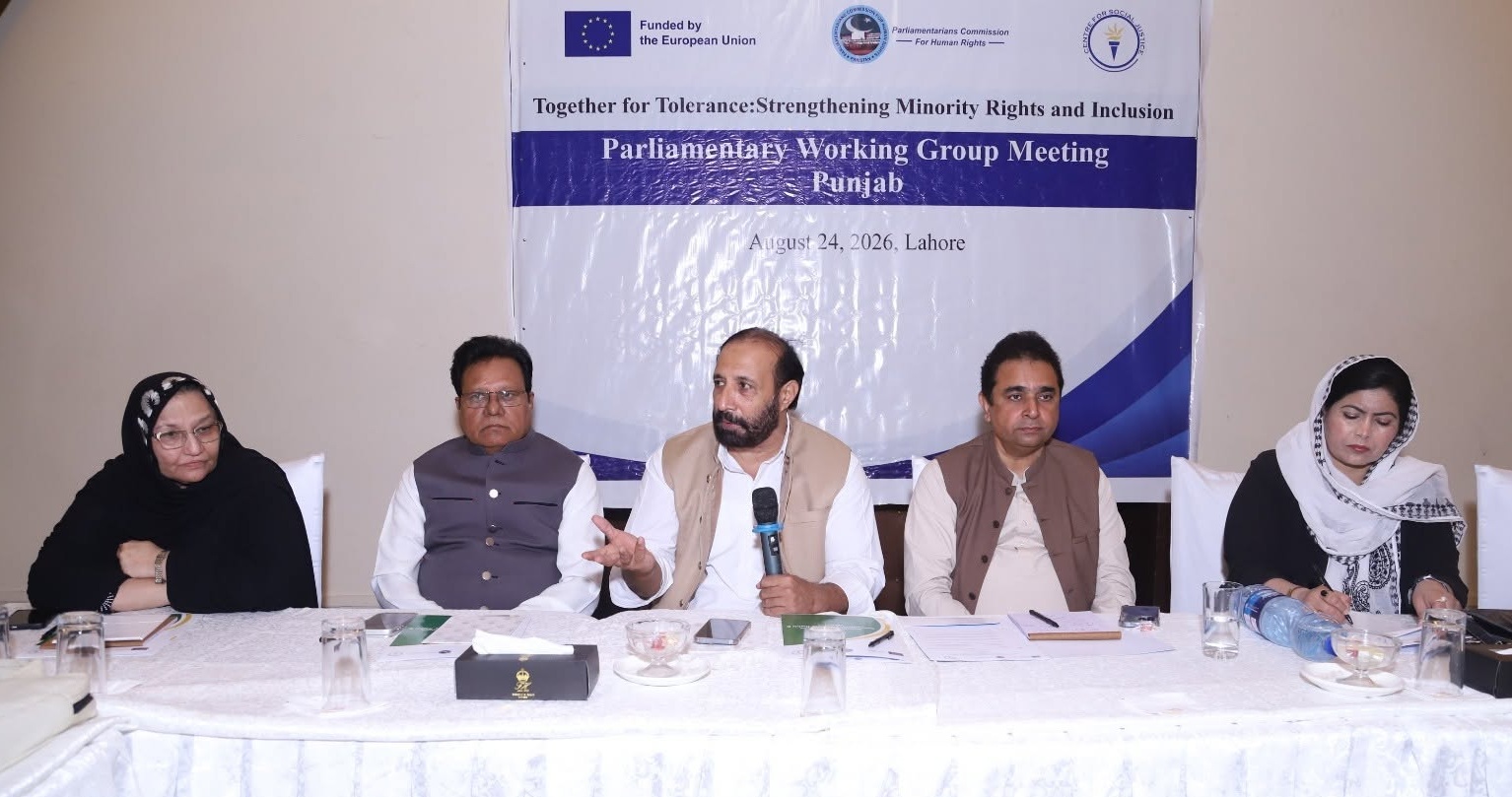
Former federal minister for human rights Kamran Michael highlighted the government’s commitment to upholding the constitutional principle of equality of all citizens and protecting rights of religious minorities. He noted the steps taken by the government to promote equal citizenship and emphasized the need to further strengthen legal and institutional safeguards to ensure that minority girls are protected from coercion and exploitation. Presenting the available evidence, Centre for Social Justice (CSJ) Executive Director Peter Jacob highlighted the scale and persistence of the issue.
According to CSJ data, 515 cases of abduction and forced conversion of minority girls and women were reported across Pakistan between 2021 and 2025, including 146 cases in Punjab. As many as seventy-two percent of the reported victims were below 18 years of age, while Lahore alone recorded 39 cases during the period. The participants reviewed a working paper and proposed legal framework for the protection of religious minority girls from forced conversion.
They examined the proposed provisions, identified areas requiring further refinement, and discussed safeguards, institutional mechanisms and policy measures necessary to ensure an effective, rights-based response to the challenges faced by vulnerable girls. The discussion highlighted the vulnerability of minor girls belonging to religious minorities and stressed the need for effective safeguards, impartial investigation, and protection of their safety, dignity and education. The participants also called for further consultation and continued engagement with relevant institutions to advance legislative and policy action.
In his concluding remarks, Punjab Minister for Human Rights and Minority Affairs Ramesh Singh Arora assured that the Punjab government was cognizant of the challenges faced by religious minorities and taking steps to strengthen their protection and promote their rights. He reaffirmed the government’s commitment to working with the civil society and other stakeholders to address gaps in the existing legal and institutional framework. He assured the participants that the issue of forced conversion, particularly where minority girls were vulnerable to coercion, abduction or forced marriage, would receive due attention from the provincial government.
On the occasion, the minister said that appropriate measures would be pursued to ensure effective protection of their rights. “Our government is giving special attention to reforming minority affairs,” he said, and shared information about the ongoing work on the Christian Marriage Act. He emphasized that resolving these issues required broader societal mindset changes alongside robust institutional and legal frameworks. The policy dialogue was organized under the European Union-funded project “Together for tolerance: Strengthening minority rights and inclusion.” Parliamentary Secretary Rasheed Lodhi, and MPA Shakila Arthur also joined the policy dialogue.