



Federal Minister for National Heritage and Culture Aurangzeb Khichi declared Pakistan a custodian of one of humanity’s most significant Buddhist civilizations, stressing that the preservation of Gandhara heritage is not merely a national responsibility but a global obligation.
“The Gandharan civilization represents a remarkable fusion of South Asian and Hellenistic traditions and remains an invaluable part of humanity’s shared heritage,” he said while addressing the inaugural session of a conference on the Buddhist heritage of Pakistan at the Taxila Institute of Archeology and Civilizations, Quaid-i-Azam University (QAU), in Islamabad.

Calling the conference a platform for intercultural dialogue and international understanding, the minister said that teachings of Buddhism founder Siddhartha Gautama Buddha carry timeless relevance. “At a time when the world faces division and conflict, the message of Gandhara reminds us of the importance of compassion, coexistence, dialogue, and peace,” he said, adding that these values resonate with Pakistan’s vision for regional harmony and cultural cooperation.
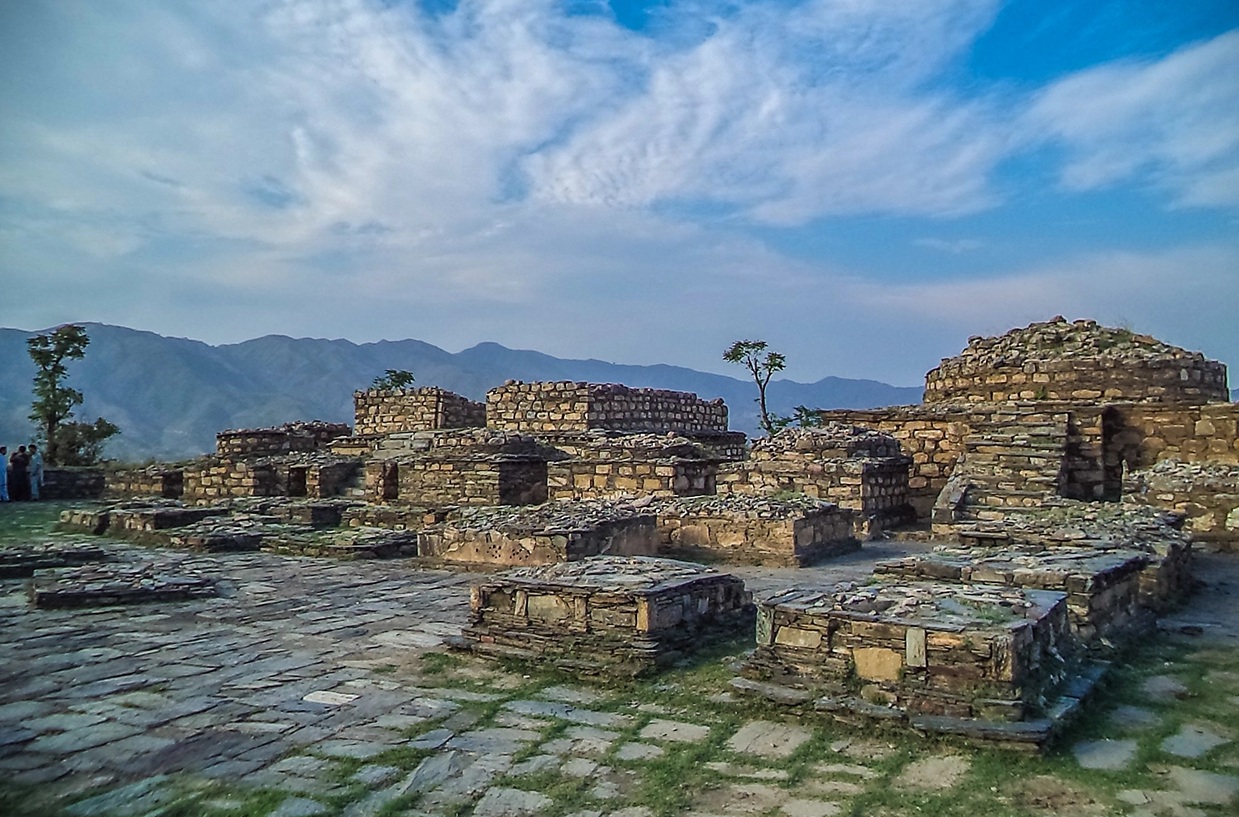
He underscored Pakistan’s deep historical roots in Buddhist civilization. “Pakistan is home to one of the world’s most significant centers of Buddhist civilization. The ancient Gandhara civilization, spread across Taxila, Swat, Peshawar, Mardan, and Charsadda, played a historic role in the development of Buddhist learning, art, architecture, and philosophy.” He also said that the government under the leadership of Prime Minister Muhammad Shehbaz Sharif remains committed to preserving and promoting Gandhara civilization.
He outlined key initiatives undertaken in recent years, including conservation and restoration of major Buddhist archaeological sites, improved protection and management of heritage locations, promotion of archaeological research and international scholarly collaboration, digital documentation and preservation of historical artifacts, and facilitation of religious tourism for international pilgrims and visitors. “We are strengthening cooperation with universities, archaeologists, and cultural partners to ensure that the priceless heritage is preserved for future generations,” he said.

Acknowledging the role of diverse stakeholders, Aurangzeb Khichi paid tribute to those working on the ground. “I appreciate contributions of archaeologists, conservation experts, local communities, academic institutions, and cultural organizations whose efforts continue to safeguard these invaluable treasures.” He described the conference as a bridge between nations and cultures. He said that the conference seeks to promote research on Buddhist heritage, encourage academic dialogue, strengthen cooperation in archaeology and conservation, and highlight Pakistan’s role as a center of Buddhist civilization.
Quaid-i-Azam University Vice Chancellor Prof Zafar Nawaz Jaspal also addressed the inaugural session, saying the university has always upheld values of academic excellence and quality research as its founding principles. “Quaid-i-Azam University is a place where students are not merely taught from textbooks, they are encouraged to engage in meaningful dialogues about contemporary challenges facing humanity,” he said. The academic sessions featured presentations by a distinguished array of local and foreign scholars.
Stefan Baums, Chai Yee Leow, Joseph La Rose, Kiran S. Siddiqui, Saira Ramzan, Thich Huong Yen, Wu Bi, Keith Leitich, Ruth Young, Venerable You Deng, Hamid Ali Gadhi, Jawaria Hamid, Atta Ullah Khan, Asif Ali, Maryam Iqbal Ghumman, Aisha Bibi, Abdul Hameed, and Riffat Saif Dar were present in person. Venerable Wellane Ananda Thero and Tom Corcoran also participated online, reflecting the broad global interest this conference has generated among Buddhist scholars and researchers worldwide.
The research papers covered a wide spectrum of themes, including Gandharan manuscripts and inscriptions, Buddhist iconography, monastic institutions, interfaith dialogue, Silk Road cultural transmission, and heritage sites across Sindh, Pakhtunkhwa and beyond. Among the distinguished attendees were Ambassador of Nepal Rita Dhital, and Ambassador of Vietnam Pham Anh Tuan, showing strong diplomatic interest from Buddhist-majority nations in Pakistan’s Gandhara heritage initiatives.
Associated Press of Pakistan (APP) Managing Director Muhammad Asim Khichi also addressed on the occasion, underscoring importance of media engagement in promoting Pakistan’s cultural and heritage narrative. The five-day conference was organized by the Humanistic Buddhism Research Center and the Taxila Institute of Archaeology and Civilizations at the Quaid-i-Azam University. The program includes academic sessions, panel discussions, and post-conference guided tours to key Buddhist heritage sites in Peshawar, Taxila, Mardan, and Swat. A Vesak Day celebration also scheduled, coinciding with one of Buddhism’s most sacred observances worldwide.