


In 2026, the Communist Party of China (CPC) marks 105 years since its founding. What began in 1921 with over 50 members has, over the course of more than a century, transformed China from a nation plagued by poverty and weakness into the world’s second-largest economy. The answer to this extraordinary transformation lies in what the Communist Party describes as the spirit of great party building — a set of founding principles that has guided the party since its inception. At its core, this spirit is defined by an unwavering commitment to truth, steadfast adherence to ideals, fidelity to the party’s founding mission, a deep sense of responsibility, courage in the face of sacrifice, perseverance through struggle, absolute loyalty to the party, and an enduring commitment to serving the people.
These values have become the ideological foundation of China’s remarkable achievements and continue to serve as the driving force behind the country’s long-term development and national rejuvenation. Equally significant in the Communist Party’s century-long journey has been the leadership of three transformative figures whose vision and policies profoundly shaped modern China. Their contributions laid the foundations for China’s emergence as a global economic and geopolitical power. Among the most influential figures in the Communist Party’s century-long history, three leaders stand out for their transformative role in shaping modern China. Their leadership laid the political, economic, and strategic foundations that enabled the country to emerge as a global power. The first was Chairman Mao Zedong, whose relentless efforts culminated in the communist revolution of 1949 and the founding of the People’s Republic of China.
The chairman adapted communist ideology to China’s unique historical and social realities, giving rise to what became known as Mao Zedong thought. His leadership fundamentally reshaped Chinese society by dismantling the feudal order and curbing the power of exploitative landlord classes, setting the nation on an entirely new political and social trajectory. Whatever the debates surrounding his legacy, Mao’s pivotal role in the birth of modern China remains undeniable. The second transformative leader was Deng Xiaoping, widely regarded as the architect of China’s economic reform and opening-up. Under his leadership, China shifted from ideological isolation towards pragmatic economic modernization, restoring stability and laying the foundations for decades of unprecedented growth. Deng introduced market-oriented reforms while preserving the Communist Party’s one-party governance, creating what later became known as the ‘socialist market economy.’ His policies dramatically improved living standards, expanded personal and cultural freedoms, and integrated China into the global economy, turning the country into one of the world’s fastest-growing economic powers.
The third is President Xi Jinping, under whose leadership China has declared the eradication of extreme poverty, consolidated its position as a global economic powerhouse, and significantly expanded its international influence. His administration has emphasized high-quality development, technological innovation, national rejuvenation, and a more proactive role for China in global governance, reinforcing the country’s status as one of the world’s leading powers. Throughout its history, the Communist Party has sought to integrate the fundamental principles of Marxism with China’s unique national realities and its rich traditional culture. This approach enabled China to establish a modern industrial base during its early years, embrace a socialist market economy through the reform and opening-up era, and, in the new era, pursue high-quality development and the goal of common prosperity.
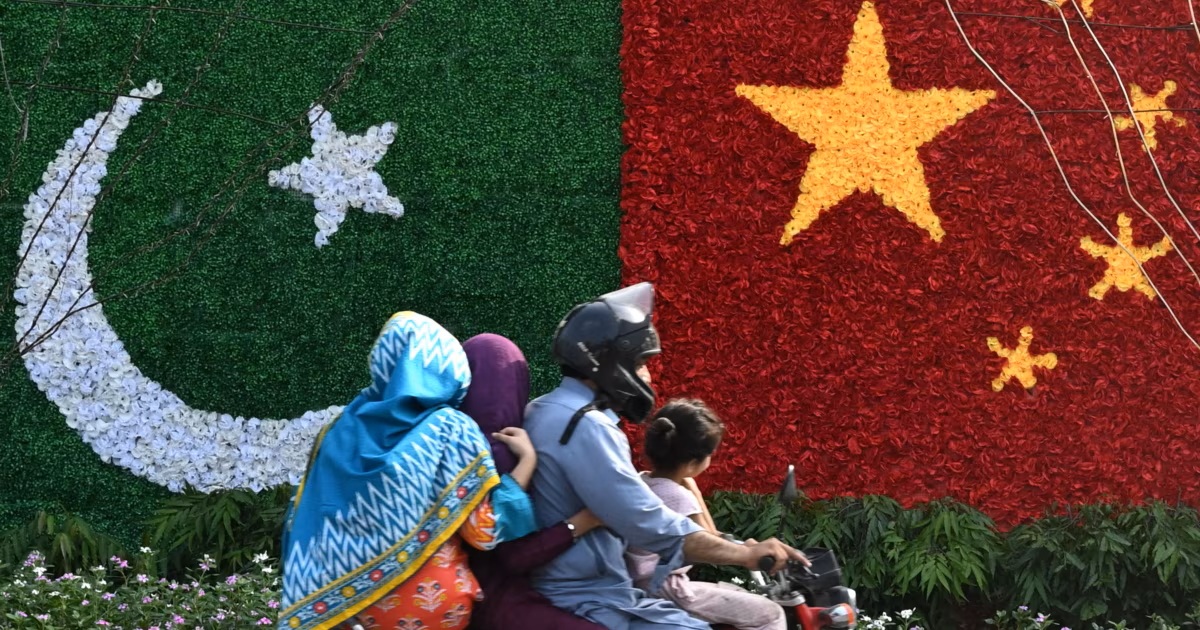
At every stage, China’s development strategy has been shaped by its national conditions while evolving in response to the demands of the times. Over the past four decades, the CPC has lifted approximately 770 million people out of poverty—more than the entire population of Europe. Today, China’s basic medical insurance system covers more than 1.3 billion people, making it one of the largest public healthcare coverage programs in the world. Beyond its domestic achievements, the CPC has increasingly presented China’s development experience as a global public good. From the vision of building a community with a shared future for mankind to the Belt and Road Initiative (BRI), Beijing has promoted international cooperation through infrastructure development, connectivity, and economic partnerships. By 2025, China had signed Belt and Road cooperation agreements with more than 150 countries and over 30 organizations.
Through collaboration in infrastructure, industrial capacity, and trade, China has sought to advance a development model that it describes as distinct from traditional Western approaches, emphasizing mutual cooperation, shared development, and win-win outcomes. The principle of remaining loyal to the party and never failing the people lies at the heart of China’s political philosophy. Within the CPC’s framework, loyalty to the party is not understood as allegiance to an individual; rather, it represents fidelity to the commitments the party has made to the Chinese people. The underlying premise is that the struggle for national development continues until the people’s aspirations for a better life are fulfilled. In this sense, loyalty to the party ultimately translates into safeguarding the fundamental interests of the people. The spirit of great party building has never been merely an abstract concept confined to political literature. More than a century, it has been translated into practical governance, shaping policies, institutions, and national development.
According to the CPC’s own narrative, this spirit has become an integral part of China’s modernization, reflected in the country’s economic transformation, social progress, and everyday life. Founded on July 1, 1921, the Communist Party of China has grown from just over 50 founding members into one of the world’s largest political organizations. By 2025, CPC membership had reached 101.286 million, an increase of 1.015 million over the previous year, representing an annual growth rate of 1.0 percent. During the same period, the number of the party’s primary-level organizations rose to 5.431 million, an increase of 181,000 from the end of 2024, reflecting a growth rate of 3.4 percent. These figures underscore not only the organizational expansion of the CPC but also its continuing emphasis on strengthening grassroots institutions as a central pillar of governance and policy implementation across China.
Communist Party’s Central Committee General Secretary Xi Jinping is set to confer the party’s highest honor, the July 1 Medal, on outstanding party members during a ceremony marking the 105th anniversary of the CPC’s founding. Xi, who also serves as president of China and chairman of the Central Military Commission, will deliver a keynote address at the event, which will be held at the Great Hall of the People in Beijing and is scheduled to begin at 10am local time. In addition to the presentation of the July 1 Medal, the ceremony will recognize exemplary party members, party workers, and outstanding grassroots party organizations selected from across the country for their contributions and service. Since the 18th National Congress of the Communist Party, the Central Committee, with Xi Jinping at its core, has introduced a series of new concepts, strategic approaches, and policy frameworks on party building, culminating in what is officially described as Xi Jinping thought on party building.
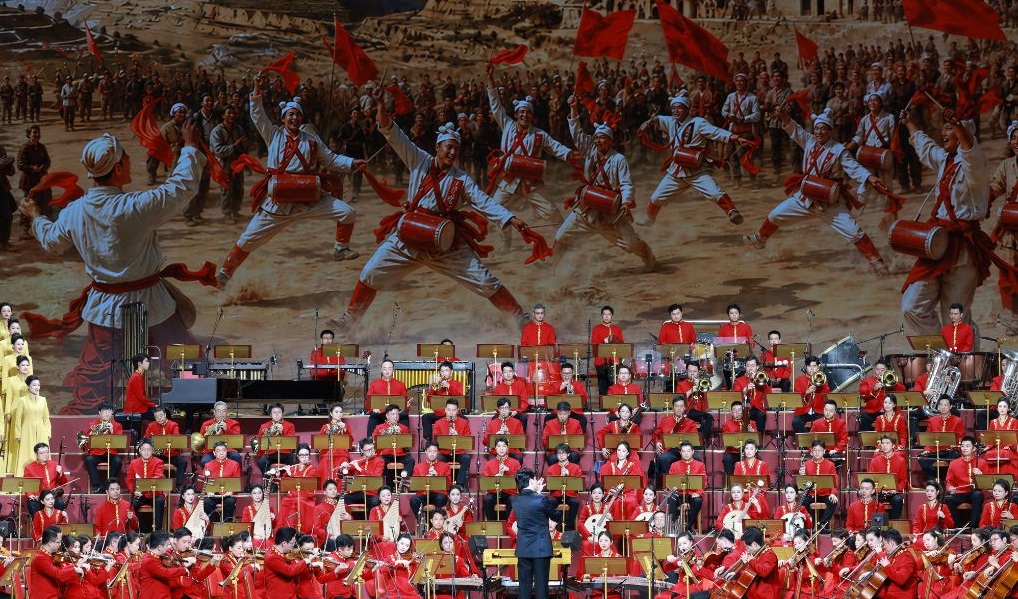
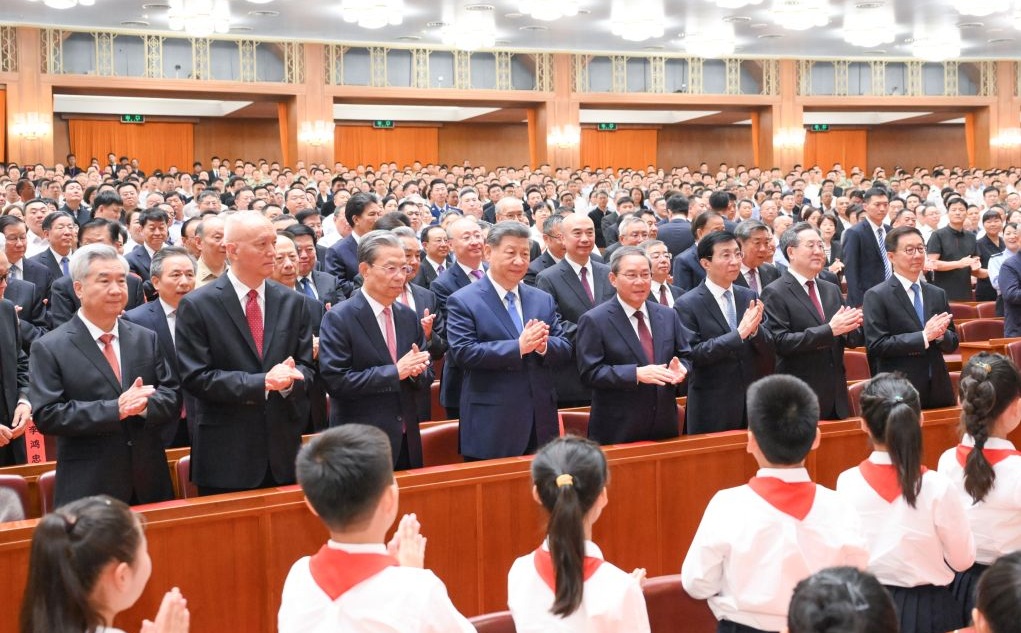
According to the party, this framework is rooted in the scientific principles of Marxism, China’s rich traditional culture, and the practical experience of strengthening the party’s comprehensive leadership and governance in the new era. Under the guidance of Xi Jinping thought on party building, the CPC aims to further advance what it describes as the great new project of party building by fostering greater ideological unity, stronger political resolve, coordinated action, and enhanced governance capacity. The party says these efforts are intended to support the building of a strong modern socialist country, advance the great rejuvenation of the nation, and contribute to the continued progress of human civilization. A gala concert – the people come first – was held in Beijing to commemorate the 105th anniversary of the founding of the Communist Party. President Xi Jinping, along with Premier Li Qiang, Zhao Leji, Wang Huning, Cai Qi, Ding Xuexiang, Li Xi, Vice President Han Zheng, and other senior party and state leaders, attended the event alongside an audience of nearly 3,000 people.
The concert opened with a children’s choir performance and featured a program divided into five thematic chapters, showcasing musical and artistic performances celebrating the party’s history, its achievements, and its commitment to serving the people. Among those in attendance were members of the Political Bureau, members of the CPC Central Committee Secretariat, vice chairpersons of the Central Military Commission, vice chairpersons of the Standing Committee of the National People’s Congress, state councilors, the president of the Supreme People’s Court, the Procurator-General of the Supreme People’s Procuratorate, and vice chairpersons of the National Committee of the Chinese People’s Political Consultative Conference (CPPCC). The event also brought together senior officials from Beijing, leaders of the central committees of China’s non-Communist political parties, representatives of veteran party members, and representatives of foreign experts working in China, reflecting the broad participation of political, social, and international guests in the anniversary celebrations.