

When the heart crunches with pain and grief, marsiyas become the vessel that materializes emotions, transforming them from abstract feelings into elegiac poetry. Marsiya-goi is an oral epic rendition of an elegiac poem lamenting the Battle of Karbala, recounting the tales of grief, pain, and cruelties inflicted upon the Ahl-e-Bayt, the immediate family of Prophet Muhammad (peace be upon him).
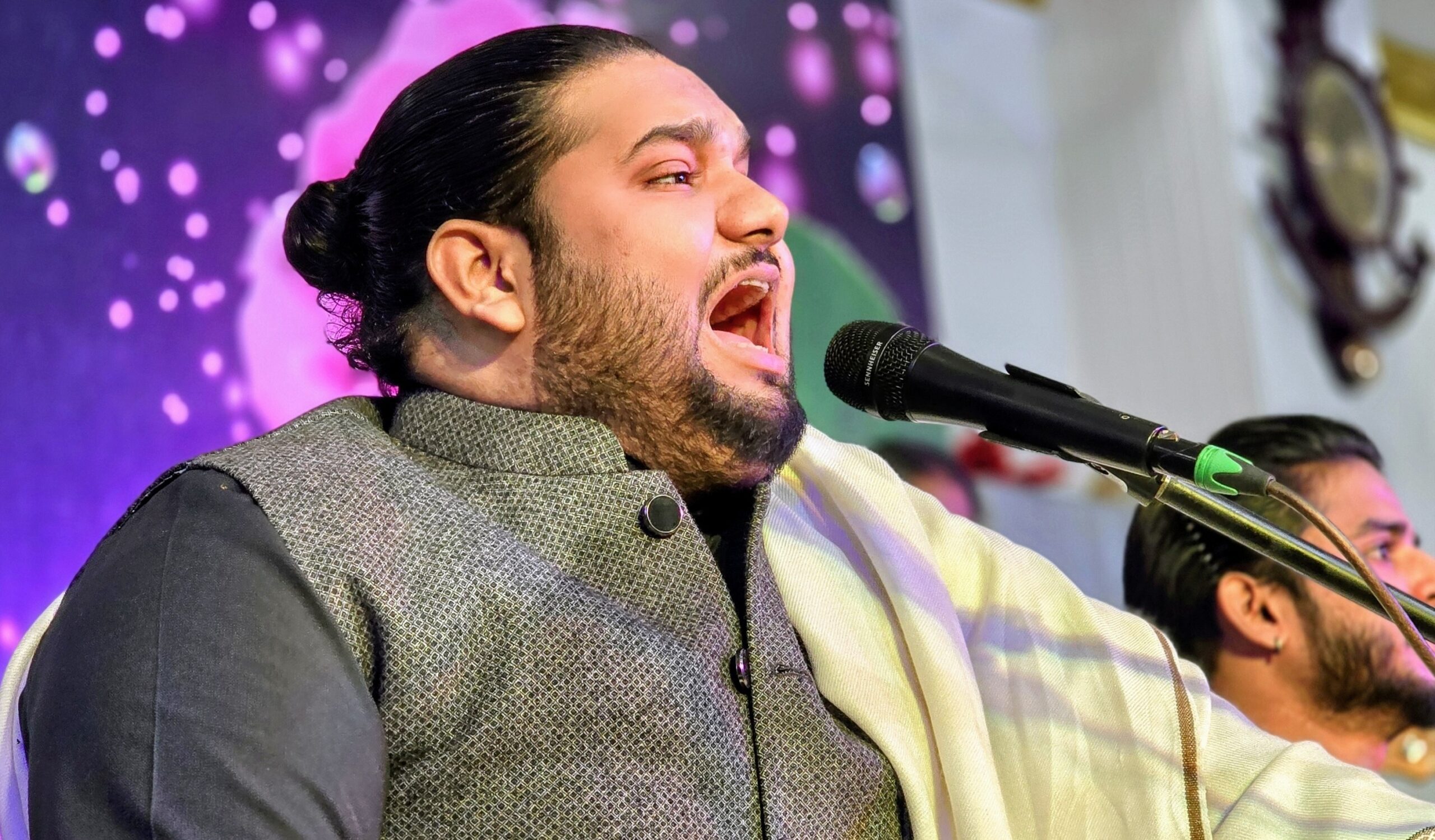
It is an important tradition and a prominent part of the cultural heritage of predominantly Shia community – estimated to make up 10 to 13 percent of the global Muslim population. On dissecting the process of marsiya-goi, one realizes how the art of storytelling is used not only to transmit history but also to evoke sentiments surrounding these events, encapsulating the entirety of the Battle of Karbala in the most beautiful way possible. Unlike noha, marsiya-goi is often performed solely by a reciter in a rhythmic way and the reciter also uses hand gestures and superior oratory tones to deepen its emotional intensity.
While marsiya-go recites the marsiya, the mourners let it sink in and cry their hearts out, often accompanied by the sounds of chest beating, which add depth and emotional arc to the storytelling. The people who recite marsiyas are called marsiya-go or marsiya-khwan. The word marsiya literally derives from the Arabic word risa, meaning lamentation or the passionate expression of grief. Historically, marsiya writing has been part of both Arabic and Iranian literary traditions. Examples from pre-Islamic literature in Arabia suggest that marsiyah is a general broader genre that included poems to commemorate the death of noble persons.
In Persian and Urdu literature, marisyas are seen in a more niched way associated with devotional literature specifically. But how did this literary tradition travel from Persia to the Indian subcontinent? To understand the tradition of marsiya-goi, one needs to go back to 1739, when the empire of Mughal emperor Muḥammad Shah was invaded by Persian conqueror Nadir Shah. He raided Delhi, exposing vulnerability of the Mughal rulers. Prior to raiding Delhi, Nadir Shah was appeased by Sa’adat Khan, an immigrant from Persia and the governor of Avadh where he founded his capital, Faizabad.
Post the death of Sa’adat Khan, with the assistance from Nadir Shah, his nephew Ṣafdarjang inherited his uncle’s appointment in Avadh which was then transferred to his son Shuja-ud-Daula. In his reign, Faizabad became a hub of literature, and marsiya writing flourished there before being taken to Lucknow by his son Asif-ud-Daula in 1775. Owing to the deep devotion of the nawabs for the martyrs of Karbala, Shia culture including marsiya-goi rose to new heights.
Historical accounts suggest that Mirza Muhammad Rafi Daula, who accompanied Nawab Shuja-ud-Daula from Faizabad to Lucknow, popularized marsiya writing in the musaddas form (a poetic structure based on six-line stanzas) which ultimately became the most famous and widely adopted form of marsiya. In the mid-nineteenth century, marsiya-goi was re-imagined by the renowned poets Mir Anis and Mirza Dabir, who made it more dynamic and multidimensional by integrating indigenous socio-cultural values into marsiya khwani. This enabled their marsiyas to resonate more deeply with local audiences.
Marsiyas explore themes such as the story of Karbala, heroic strength and courage of each member of the caravan, the cruelties inflicted upon the family of the prophet (peace be upon him), the vulnerability of the women and children, and martyrdom as the ultimate moral virtue embodied in the tragedy. A true classical marsiya usually has 10 common set-pieces or themes and often occurred in the given order. However, it is not a rigid template that must be followed.
Cehra (face): Praise to God, Prophet Muhammad (peace be upon him), and the Imams. Majara (event): The incident is narrated. This also is an indicator to the broader theme of marsiya. Sarapa (head to toe): The physical and spiritual qualities of the person being referred to is explained. Rukhsat (farewell): Explains how the noble prepared for battle, sought permission from the Imam, and shared his final words before setting out for the battlefield. This section of the marsiya often incorporates perspectives of the women in the camps, highlighting their emotions and experiences.
Amad (arrival): It imagines the heroic entry of the referred person on the battlefield, sketches sharpness of his sword and horse. Rajaz: Following the Arabic war traditions, it features how the heroic figure had introduced his lineage before formally starting the battle. The battle: This part features the stories of the battle and the fight of the referred warrior against aggressors. Martyrdom: How the warrior fought vigilantly and embraced martyrdom. Lamentation: When the Imam brought the body of the martyred back to the camp and the sorrow and cries that would prevail the camps.
Lastly, prayers and regards are paid to the martyrs of Karbala and Ahl-e-Bayt. Years have passed, yet this oral tradition continues to echo through the streets of the subcontinent in the voices of narrators who carry these marsiyas etched in their hearts and souls. They are not formally trained by masters. Instead, the depth of sorrow they carry, along with their inherited sense of duty and devotion, is enough to sustain this tradition. Through their recitation, they make every heart feel the sorrow and sufferings.