

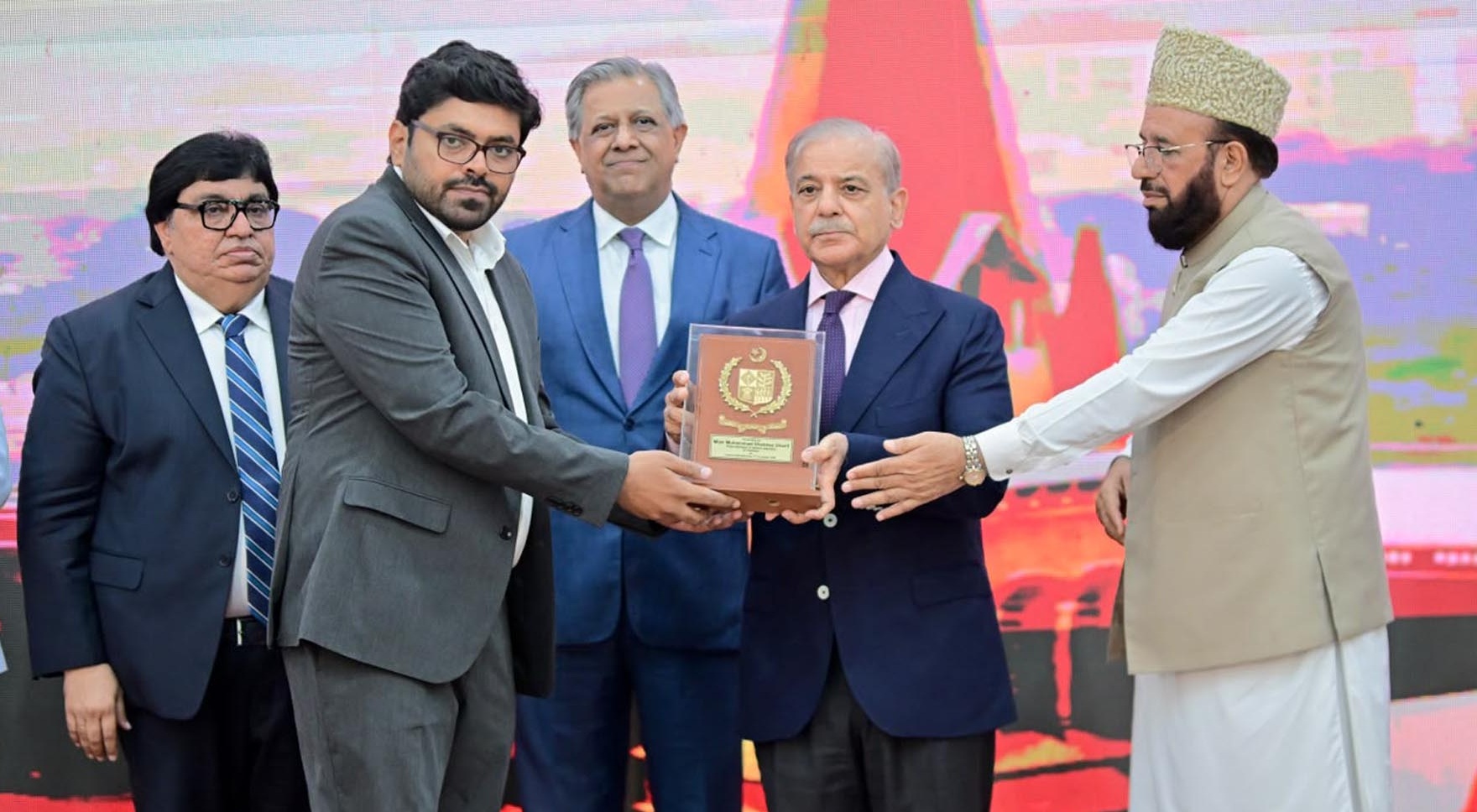
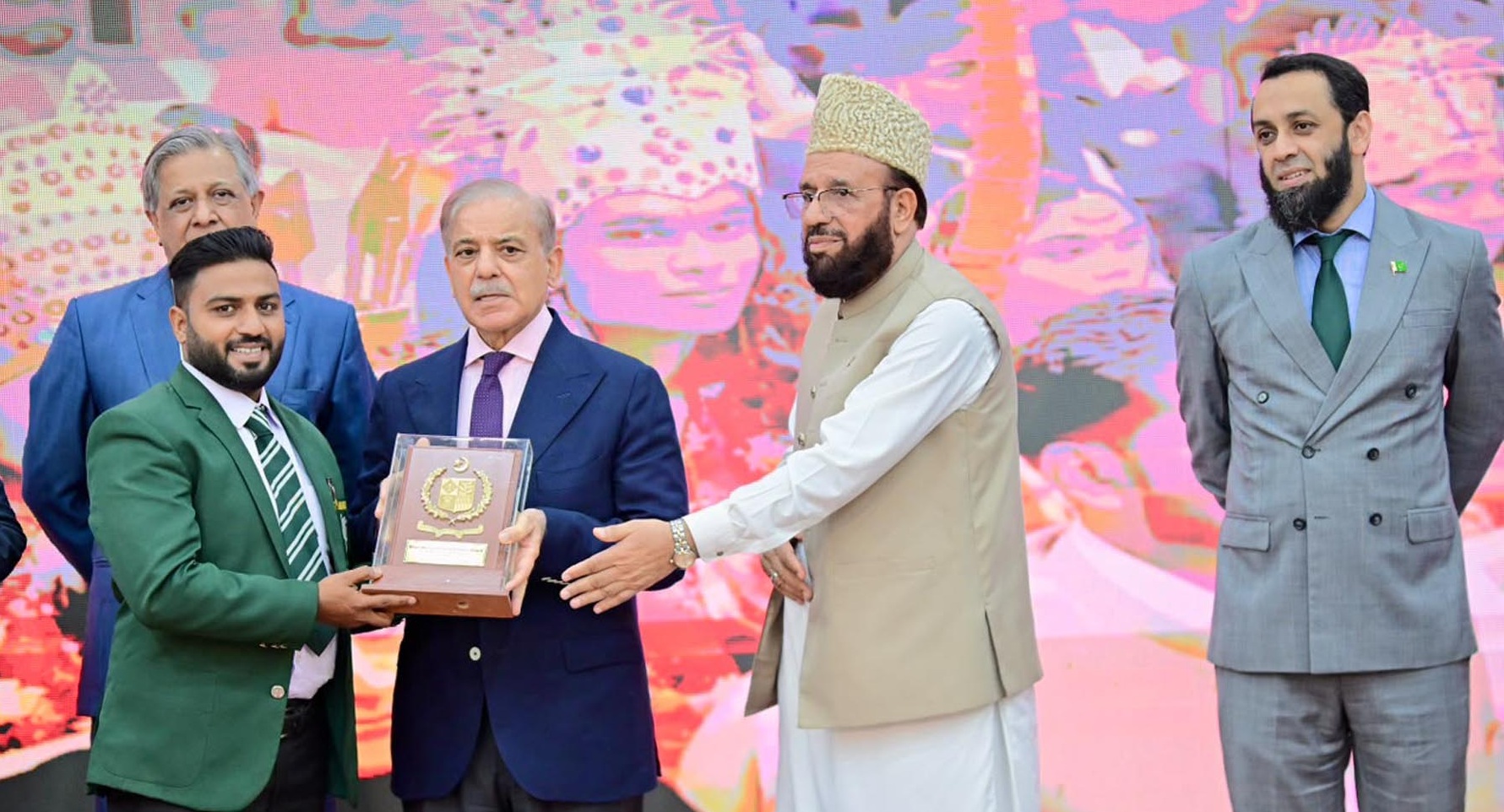
Prime Minister Shehbaz Sharif presented awards and honors to members of minority communities in recognition of their services for Pakistan during a ceremony held at the Prime Minister’s Office in Islamabad to mark the National Minorities Day. He assured the audience that the constitution guaranteed equal rights to all Pakistanis in line with August 11 address of Quaid-e-Azam Muhammad Ali Jinnah in 1947.
Addressing the ceremony, the prime minister said that the minority communities had played a significant and commendable role in the creation, development and progress of the country in its journey from creation to national development. He underlined that all citizens, regardless of their religion, must work together for the growth and prosperity. He said Christians, Hindus, Sikhs, Zoroastrians and members of other minority communities had played a constructive role in the Pakistan Movement and in the country’s national development.
He particularly appreciated contributions of the Christian community in education, recalling the educational services of their schools and his own and his siblings’ early education at Christian educational institutions. He mentioned prominent figures from minority communities, including Satya Prakash Singha, Jogendranath Mandal, Justice Alvin Robert Cornelius, Cecil Chaudhry, SL Gibbs and others, and said that minorities had rendered valuable services in national defense and other fields. He said that sacrifices of minority citizens in the country’s wars and the fight against terrorism were unforgettable.
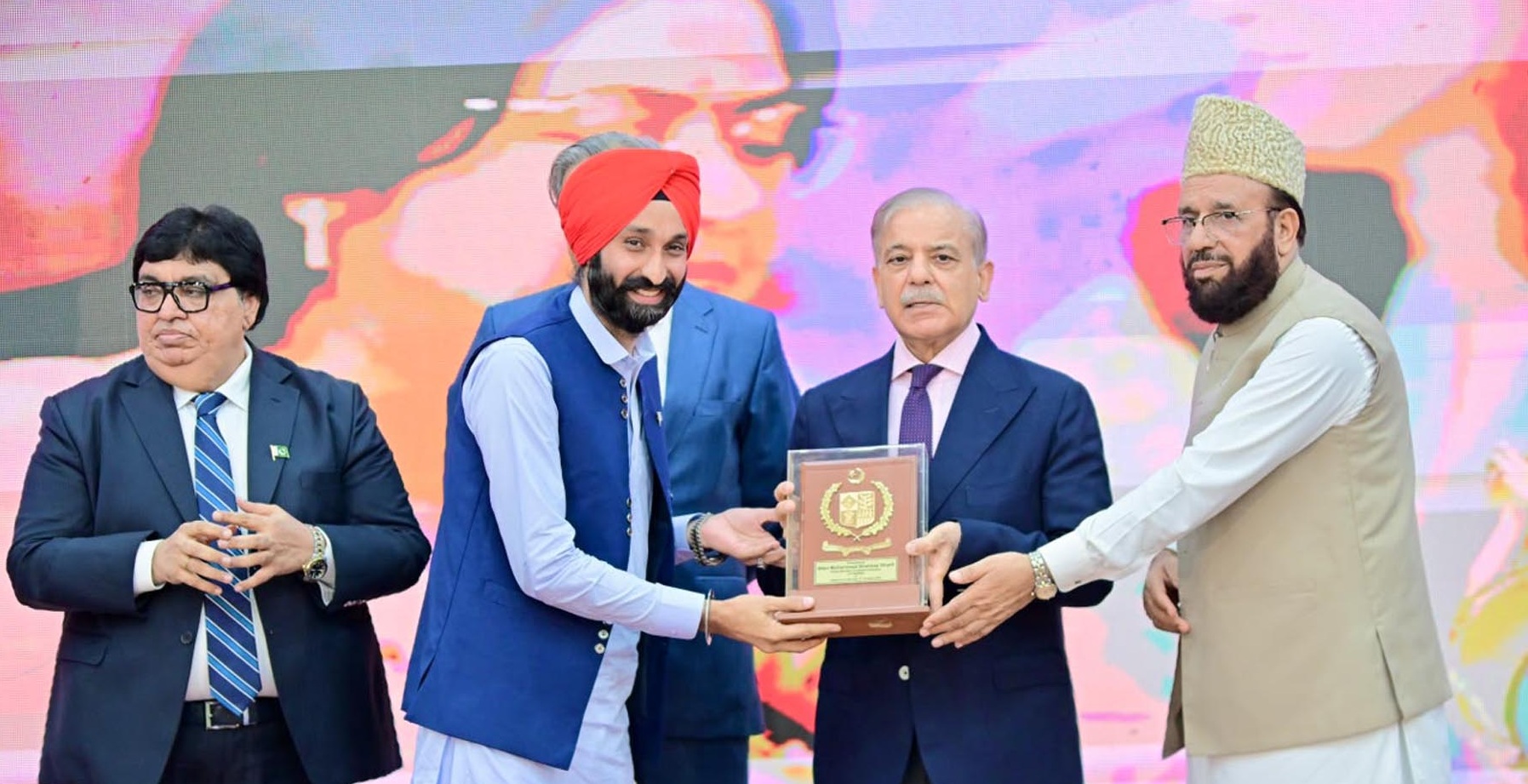
Shehbaz Sharif said that all Pakistanis needed to work together for the country’s development and prosperity, while the younger generation should be equipped with modern knowledge to enable Pakistan to attain a prominent position in the world. He said the country should move forward while keeping in view the objectives of Pakistan and strive to secure its rightful place among the comity of nations. He also reiterated Pakistan’s commitment to peace, peaceful coexistence, stability and development in the region, and beyond.
Addressing the audience, Federal Minister for Religious Affairs Sardar Muhammad Yousaf said that minorities enjoyed protection in Pakistan and that the government was taking measures for their welfare. The constitution fully guaranteed minority rights, he said, and mentioned security of worship places, educational scholarships and financial assistance for minorities, while 10 religious festivals, including Holi and Diwali; Christmas and Easter; Baisakhi; Chilam Joshi, Uchal, and Choimus, were observed at the official level.
State Minister for Religious and Interfaith Harmony Khel Das Kohistani announced on the occasion that work was underway on the Christian Marriage Act, as the the Sikh Marriage Act and Hindu Marriage Act were important developments for minorities. He said that minorities in Pakistan enjoyed religious freedom and protection. He described the prime minister’s participation in the National Minorities Day ceremony as a matter of honor for minorities. Senator Khalil Tahir Sindhu said the National Commission for Minorities Act was a welcome step towards protecting rights of minorities.
MESSAGES ON NATIONAL MINORITIES DAY
In a message on the National Minorities Day, President Asif Ali Zardari called for renewing commitment to making Pakistan a country where justice, equality, tolerance and service to humanity were defining features. “We must ensure that our future generations inherit a Pakistan that stands as a beacon of peace, progress, stability and mutual respect,” he said, and conveyed greetings to all Pakistanis on the historic day. He said that the minorities had contributed prominently in health, education and other domains of life and continued doing so even today along with other compatriots.
“The entire nation is proud of their national services, patriotism and significant contribution to the country’s holistic progress and development,” he said. He said the day reminded them that the foundation of a strong, peaceful and stable state rested not only on economic growth but also on justice, equality, mutual respect and the protection of human dignity. “Pakistan’s true strength lies in its people who, setting their religious, cultural and traditional differences aside, stand united under one national flag. I firmly believe in the equality of every citizen, regardless of religion or faith, before the state,” he said.
He said that Quaid-e-Azam Muhammad Ali Jinnah had explained his future vision of Pakistan while addressing the first Constituent Assembly in 1947. He observed that the vision was fully incorporated in 1973 Constitution created by their national leaders led by the late prime minister Zulfikar Ali Bhutto. He said that the founder of the nation on various occasions stressed upon religious freedom and protection of the minorities. He said minorities had earned distinction in various spheres of national life, including education, healthcare, law, business, arts, sports, research, social services, and defense.
In his message, Prime Minister Shehbaz Sharif said that Pakistan commemorates National Minorities Day every year with a firm resolve to acknowledge invaluable presence of minorities, their inclusion in the national mainstream, and their significant contributions to national progress and prosperity. He said the minorities living in Pakistan were an integral part of the national fabric and reflected the true beauty of the country’s diverse social and cultural landscape. On August 11, 1947, while addressing the historic inaugural session of the Constituent Assembly, the Quaid-e-Azam had unequivocally affirmed the rights of minorities in Pakistan.
He said the historic words of the Quaid-e-Azam held an enduring and unforgettable place in Pakistan’s social order, system of governance and religious ethos. He termed enactment of the National Commission for Minorities Act, 2025 a significant national milestone, noting that the Ministry of Human Rights was taking necessary steps for the establishment of an independent commission that would play its role in redressing grievances, overseeing constitutional and legal safeguards, making recommendations on government policies and legislation, monitoring matters relating to places of worship and employment quotas, and promoting equality and inclusion.
Shehbaz Sharif said the Interfaith Harmony Policy 2025 had been introduced to promote interfaith harmony and social cohesion, aimed at protecting religious freedom, promoting interfaith dialogue and ensuring equal opportunities without discrimination. He said that the government was also implementing the National Policy for Countering Violent Extremism 2024. He said the Ministry of Human Rights, in consultation with all relevant stakeholders, had also introduced the National Action Plan for Human Rights 2026, which included specific measures for the protection and promotion of the rights of minority communities.
In his message, Deputy Prime Minister and Minister for Foreign Affairs Senator Ishaq Dar reaffirmed the government’s unwavering commitment to ensure that every citizen enjoys equal rights, opportunities, and protection under the law. He reiterated the commitment to upholding the vision of the Quaid-e-Azam for a Pakistan in which the rights, dignity, and freedoms of all citizens were fully protected. He said that the protection of minorities was firmly rooted in the teachings of Islam, which enjoin the nation to uphold justice, dignity, equality, and respect for all communities.
He said that the constitution likewise guarantees the political, economic, and social rights of minorities and provides for their equal citizenship. As a state party to core human rights treaties, he said that Pakistan remains committed to safeguarding the fundamental rights and freedoms of all its citizens, without discrimination on the basis of religion, race, or creed. He said Pakistan values invaluable contributions of its minority communities to the national life and to the country’s social, economic, cultural and political development. He said that their contributions have enriched shared heritage and strengthened the fabric of the society.
Addressing a ceremony at the Parliament House, Senate Chairman Yousaf Raza Gilani said that the contribution of minority communities to the construction, progress and development was indelible, as they were an integral part of the country’s social fabric and national identity. “It is responsibility of the state to ensure dignity, protection, equal rights and equal opportunities for development of every citizen” he said. The ceremony was attended by lawmakers, members of the Parliamentarians Minorities Caucus, and senior officials of the Senate Secretariat.
The Senate chairman recalled that in 2009, during his tenure as the prime minister, his government declared August 11 as the National Minorities Day. He said that the initiative was aimed at recognizing the equal status, rights and services of minority communities and reaffirming the national commitment to their inclusion and empowerment. During that period, he said that several practical measures were taken, including the establishment of a Federal Ministry for Minority Affairs, allocation of a quota for minorities in federal government jobs, and steps to enhance minority representation in the Senate.
Yousaf Raza Gilani said that the history of Pakistan was enriched by the invaluable services and sacrifices of its minority communities. Paying tribute to the role of minority leaders in the Pakistan Movement, he said that the Quaid-e-Azam selected Jogendranath Mandal to preside over the first Constituent Assembly and appointed him as the first minister for law. He said that this was a clear reflection of the principles of equality, inclusion and the national unity. He highlighted the outstanding contributions of members of minority communities in various fields, and acknowledged services of distinguished personalities.
“This parliament is yours. Under the shade of this flag, we are all one. Your protection, equal opportunities and a bright future are the responsibility of the state,” Yousaf Raza Gilani said while addressing the minority communities. He emphasized that Pakistan should be a country where every citizen was respected, every community was valued, and every individual was provided equal opportunities to contribute to the country’s shared future. He commended Senator Danesh Kumar and members of the caucus for their efforts to safeguard minority rights, promote equal opportunities and strengthen institutional accountability.
Addressing the ceremony, Senator Danesh Kumar paid tribute to the Senate chairman for his services and commitment to the rights of minorities. Senator Atta-ur-Rehman said that all citizens were equal and no one has superiority over another. Senator Khalil Tahir Sindhu said that the Quaid-e-Azam’s historic August 11 address should be incorporated into the national curriculum and important national references. Khyber Pakhtunkhwa Governor Faisal Karim Kundi said that minorities were equal citizens and their contribution to the country’s development and prosperity was immensely important.
Former prime minister Raja Pervaiz Ashraf said that holding the National Minorities Day ceremony at the Parliament House conveyed a clear message to the world that all citizens in Pakistan enjoy equal rights and religious freedom. Member of National Assembly Mahesh Kumar Malani paid tribute to the Senate chairman for highlighting National Minorities Day at the national level. State Minister for Religious Affairs Khel Das Kohistani said that adherence to the principles of the Quaid-e-Azam was the key to Pakistan’s progress, stability and prosperity.
In his message, National Assembly Speaker Ayaz Sadiq paid tribute to the valuable contribution of minority communities to the development and progress of Pakistan, saying that minorities living in the country were rendering valuable services in all walks of life. Under Article 25 of the constitution, he said that all citizens were equal before the law and were entitled to equal protection of law without discrimination on the basis of color, race, gender or religion. He said that the day provides an opportunity to reaffirm collective resolve to promote mutual respect, tolerance, interfaith harmony and national unity.
He said that the parliament had always played an effective role in protecting the rights of minority communities, promoting interfaith harmony and ensuring equal opportunities through legislation. He said minority parliamentarians in the National Assembly were actively contributing to legislation and national affairs. He said the foundation of a strong, developed and prosperous Pakistan lay in equality, justice, religious freedom and the equal participation of all citizens. He reiterated that the parliament would continue to fulfil its responsibilities with commitment to protecting the constitutional rights of minorities, promoting religious tolerance and further strengthening national unity.
On the occasion, Deputy Speaker Syed Ghulam Mustafa Shah said that the day reminded them that people belonging to all faiths had played a significant role in the development and stability of Pakistan. He said that tolerance, mutual respect and religious freedom were the foundations of a strong, peaceful and prosperous society. In accordance with the vision of the Quaid-e-Azam, and the spirit of the constitution, it was a collective responsibility to build a society where all citizens could live with religious freedom and without discrimination, he said.
In his message, Pakistan People’s Party Chairman Bilawal Bhutto said that the National Minorities Day was a reminder that Pakistan belongs equally to every citizen, regardless of faith, and that the true strength of the nation lies in the equality, freedom and equal citizenship of all its people. He said that the sacrifices, services and contributions of Pakistan’s minority communities were woven into the very fabric of the nation. “Their dreams are our dreams, their hopes are our hopes, and their future is inseparable from Pakistan’s future.”
He reaffirmed the party’s unwavering commitment to protecting the constitutional rights, religious freedom and equal citizenship of minority communities. He said the vision of the Quaid-e-Azam calls for a Pakistan where diversity was celebrated as a strength and every citizen can live with dignity, without fear or discrimination. He lauded President Asif Ali Zardari for declaring March 11 as the National Minorities Day during his first term in office, describing the decision as a reflection of his enduring commitment to tolerance, harmony, and national unity.
Appreciating contributions of the minority communities in education, healthcare, law, public service, business, arts, sports and many other fields, First Lady Aseefa Bhutto said that their achievements were an important part of Pakistan’s story of progress and development. She extended her warm greetings to all minority communities, and said that Pakistan’s progress was strengthened by the contributions of citizens from all faiths. She said that the day was an opportunity to recognize their valuable contributions and to reaffirm the principle that every citizen was an equal member of the national community.
In a video message, Pakistan Hindu Council chief Dr Ramesh Kumar Vankwani announced to dedicate the Global Hindu Award, which he recently received in Canada, to Pakistan on the occasion of the National Minorities Day. He said that March 23, August 11 and August 14 hold exceptional significance in Pakistan’s national history. Under the inspiring leadership of the Quaid-e-Azam, the adoption of the Lahore Resolution on March 23, 1940, gave a clear roadmap to the dream of an independent and sovereign homeland, while on August 14, 1947, Pakistan emerged as an independent state on the world map.
However, he emphasized that August 11, 1947, falling between these two historic dates, was a significant day that provided clear direction regarding the future of minorities. During the final days of British rule, he said that the region had descended into uncertainty. In particular, he said non-Muslim communities faced concerns and uncertainty about their future. In such a critical situation, he said that the Quaid-e-Azam, while addressing the Constituent Assembly on August 11, 1947, clearly articulated the principles of equal citizenship and religious freedom for all citizens.
“I am proud that my forefathers responded to Quaid-e-Azam’s call and declared Pakistan their motherland, he said, adding that millions of citizens belonging to Pakistan’s non-Muslim communities were passionately playing their proactive role in the development and progress of Pakistan. Being honored with the Global Hindu Award in Canada was more than a personal achievement, he said. “In fact, it is a great honor for Pakistan,” he said, emphasizing that winning the prestigious recognition demonstrated that patriotic citizens can also bring honor to their country through their abilities, services and contributions.