

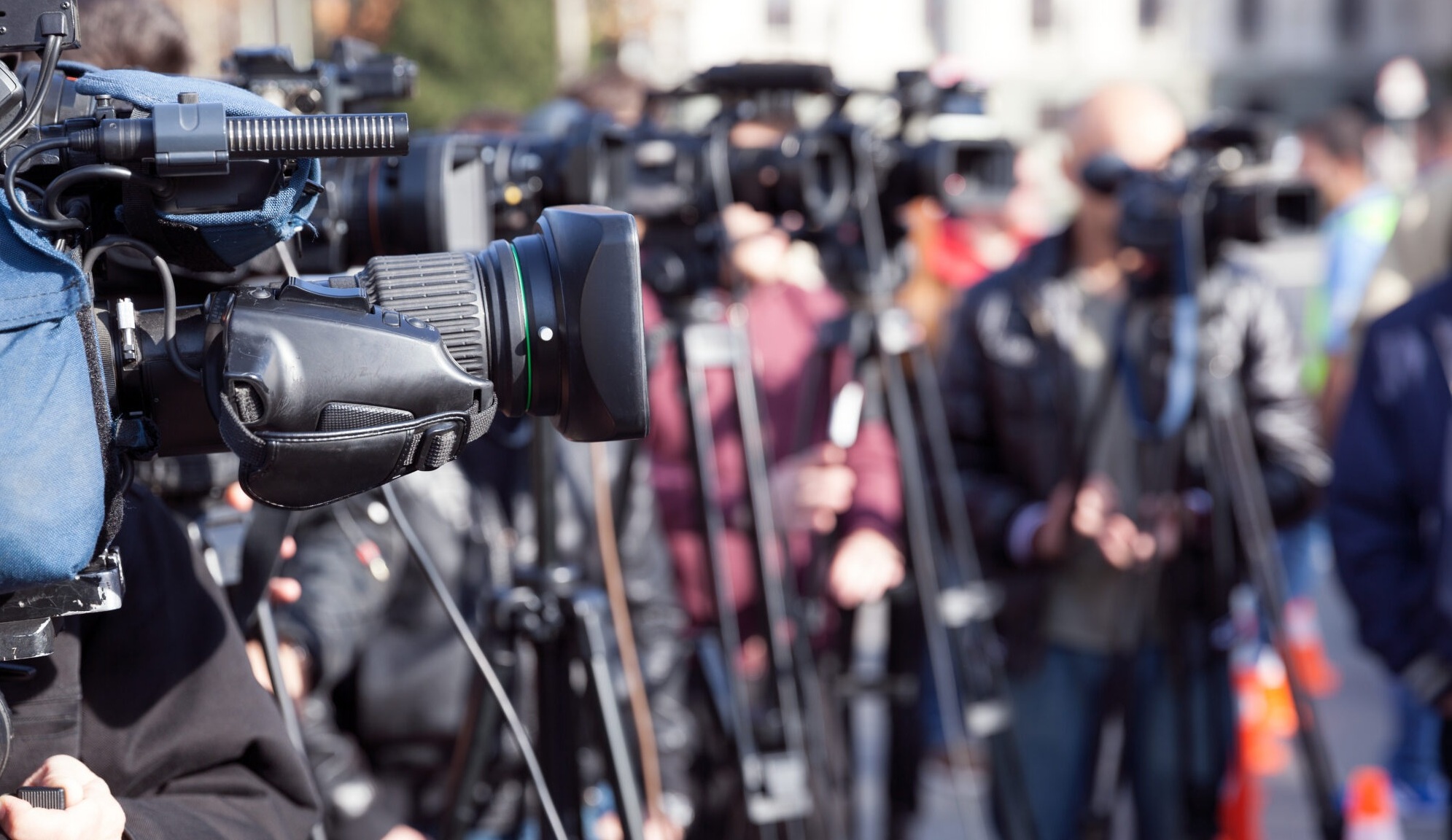
Journalists, Human Rights Commission of Pakistan (HRCP), Amnesty International and the Pakistan Federal Union of Journalists (PFUJ) issued strongly worded statements separately to express their concerns and condemn a notification issued by the government of Prime Minister Shehbaz to restrict free movement of foreign journalists, and reporters associated with foreign media outlets from visiting beyond Lahore, Karachi, and in Islamabad.
According to the Foreign Media Facilitation Guidelines 2026, all foreign media personnel will now need a no-objection certificate (NOC) from the Ministry of Information and Broadcasting to travel to any city except Islamabad, Lahore and Karachi to produce news content, story, video, film, documentary or social media content. Under the new rules, all entities operating in Pakistan to facilitate foreign media in any capacity are also required to register with the ministry’s External Publicity Wing.
The guidelines also noted that press registration of individuals can be suspended or withdrawn for acts against ideology, sovereignty, security or public order if the ministry deems appropriate at any stage. In a letter addressed to the prime minister and relevant ministers, the Amnesty International urged authorities to end restrictions on the right to freedom of expression, including press freedom, access to information, and human rights advocacy. They called for the withdrawal of the ‘new guidelines,’ which they said placed onerous restrictions on reporting by foreign journalists.
Besides Amnesty International, Digital Rights Foundation (DRF), Human Rights Commission of Pakistan, Bolo Bhi, Article 19, Internet Sans Frontiers, Lawyers for Lawyers, Paradigm Initiative, Tech Global Institute, and several other rights organizations signed the letter. “National security, public order and false information must not become open-ended justifications for criminalizing dissent, controlling newsrooms or disconnecting entire populations. Pakistan’s authorities must protect people, including journalists, lawyers, and human rights defenders, rather than punish them simply for their work.”
In a joint statement, PFUJ President Afzal Butt and Secretary General Arshad Ansari pointed out that the notification amounted to attacking the freedom of expression and putting curbs on press freedom. They said that the government has not only banned foreign journalists from visiting most of the areas except major cities, but they have also restricted the movement of local media persons working with foreign media outlets. How can foreign correspondents and their Pakistani colleagues perform their professional duties after this notification, they questioned?
‘HUMAN RIGHTS CRISIS’
“We all know that freedom of the press is guaranteed under the Article 19, which states clearly that every citizen has the right to freedom of speech and expression, and freedom of the press. Then why the authorities have to introduce the Foreign Media Facilitation Guidelines 2026 ‘suddenly’ even in the presence of other strict but unacceptable laws, including the Prevention of Electronic Crimes (Amendment) Act, 2025,” said Tamseela Chishti, a seasoned journalist from Lahore. “As journalists, we know that our voice matters despite restrictions imposed on us in the name of anything,” she said.
She said the authorities were showing a recognizable pattern of authoritarian practices again and again but more strictly and more openly to restrict all kinds of freedoms. “From ‘administrative’ measures to recently introduced Foreign Media Facilitation Guidelines 2026, we will not accept restrictions either on local journalists, or foreign correspondents who are showing right side of the picture,” said Tamseela Chishti who is now running her own digital channe. She pointed out human rights crisis due to silencing critics, restricting the press and reshaping access to information besides eroding the rule of law.
Nasir Zaidi, a senior journalist from Islamabad, said that foreign media has been objectively reporting about protests, crackdowns on opposition parties and overall social and political situation in Pakistan. “For decades, governments have always tried to kill the news and they failed because of the reporting of foreign media and now authorities came up with these repressive rules to curb movement of the journalists,” he said. ‘They’ don’t want the truth to be reported, he said, adding that Pakistan was sending wrong message to the world with all these rules curbing free speech and freedom of media.
In a statement, the Human Rights Commission of Pakistan stated that the requirement that journalists obtain state approval to report from large parts sends a chilling message: that critical reporting is unwelcome. It said the rules would invariably institutionalize bureaucratic control over news gathering and risk deterring independent reporting on matters of public interest rather than facilitate journalism. From arbitrary curbs on reporting and increasing censorship to legal and administrative barriers, it said that the space for independent journalism has continued to shrink.
The PFUJ leadership pointed out that the latest move would only bring disrepute to Pakistan and damage its image. “Pakistan is already ranked low among the countries that have the worst record in press freedom. And the action of the government would add to it.” Both Afzal Butt and Arshad Ansari demanded of the government to immediately lift the restrictions, as such an action would also affect the employment of Pakistanis working with foreign media houses. We would be left with no option but to resort to protest and demonstrations if our demands are not accepted.”
‘ANOTHER POINT OF VIEW’
Committee to Protect Journalists (CPJ) representative Waliullah Rahmani sated the Foreign Media Facilitation Guidelines, 2026, open the door for civilian and security agencies to impose further restrictions on foreign journalists and prevent them from reporting freely across the country without fear of legal or administrative retaliation. “Journalists should be free to report the news wherever they are,” spokesperson for Reuters news agency said. The Financial Times newspaper reported that it supports the ability of journalists to report freely and independently. In a statement, BBC stated it was extremely concerned about the new restrictions and called for them to be reversed.
Catholic Commission for Justice and Peace Director Khalid Rasheed Asi told the Union of Catholic Asian News (UCA News) in Faisalabad that the new rules could delay international coverage of incidents involving religious minorities. It reported that agencies were after foreign correspondents and even NGOs that raise their voice for religious minorities. Urging the government to reconsider the measures, he said that the latest rules will badly affect the Christian community. He also said that the international media coverage helps Christians in Pakistan to share their concerns with the wider Catholic church.
Faisal Pervaiz, one of the organizers of the annual pilgrimage of Catholic community, stressed the importance of media coverage of the three-day gathering, scheduled in the first week of September in Mariamabad, a Christian-dominated village in Sheikhupura district. Founded in 1892, it is home to the National Marian Shrine, which draws hundreds of thousands of pilgrims every year. The organizer said that people in Pakistan and abroad deserve to know about the different expressions of devotion among local Catholics who travel on foot, by bicycle and by vehicles to show their reverence at the historic cave.