



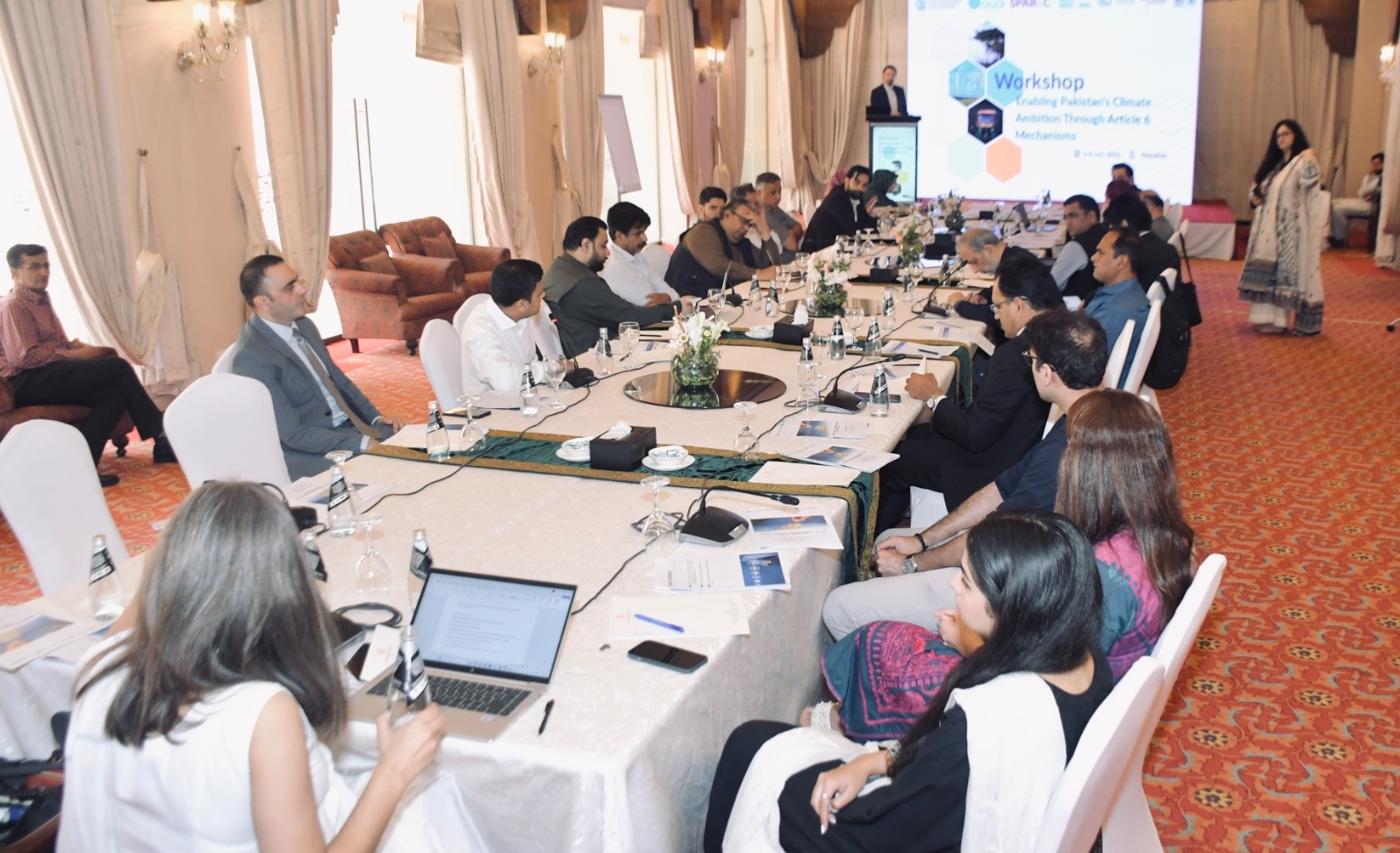
Senior government officials, technical experts, private sector representatives and partners joined a three-day capacity-building workshop in Islamabad aimed at strengthening Pakistan’s readiness to participate in international carbon markets under the Article 6 of the Paris Agreement – that enables countries to voluntarily cooperate to reduce greenhouse gas emissions and meet their climate targets.
To strengthen Pakistan’s preparedness for participation in the carbon markets under the Article 6, the workshop brings together representatives from federal and provincial governments alongside private sector stakeholders to deepen technical knowledge and institutional readiness for implementing Article 6 mechanisms. The workshop was organized in partnership with the Ministry of Climate Change and Environmental Coordination (MoCC&EC), the UNFCCC Secretariat and the Supporting Preparedness for Article 6 Cooperation (SPAR6C) program – implemented by the Global Green Growth Institute (GGGI) and led by the UNEP Copenhagen Climate Centre (UNEP-CCC) in Pakistan.
As countries accelerate efforts to meet their Nationally Determined Contributions (NDCs), the Article 6 offers new opportunities to mobilize climate finance, support low-carbon investment and strengthen international cooperation. Pakistan has recently taken important steps towards developing its national carbon market framework, creating a timely opportunity to build the technical expertise required for effective participation in these emerging markets. During the opening ceremony, Ministry of Climate Change Additional Secretary Mahmood Hassan expressed hope that by mastering Article 6 frameworks, rigorous carbon accounting, and data integrity through such workshops, national systems can align seamlessly with strict standards and market expectations.
“We stand at a critical juncture where environmental ambition must be matched by robust operational mechanics. Carbon markets are inherently complex, highly dynamic, and rapidly evolving under the global climate regime. This workshop is designed to bridge the gap between high-level policy and real-world execution,” he said. Lead trainers shared that over the course of three days, participants will gain practical knowledge of the rules, procedures and institutional arrangements that underpin Article 6 implementation. The program combines expert presentations, technical demonstrations, interactive discussions and case studies designed to translate guidance into practical application within Pakistan’s national context.
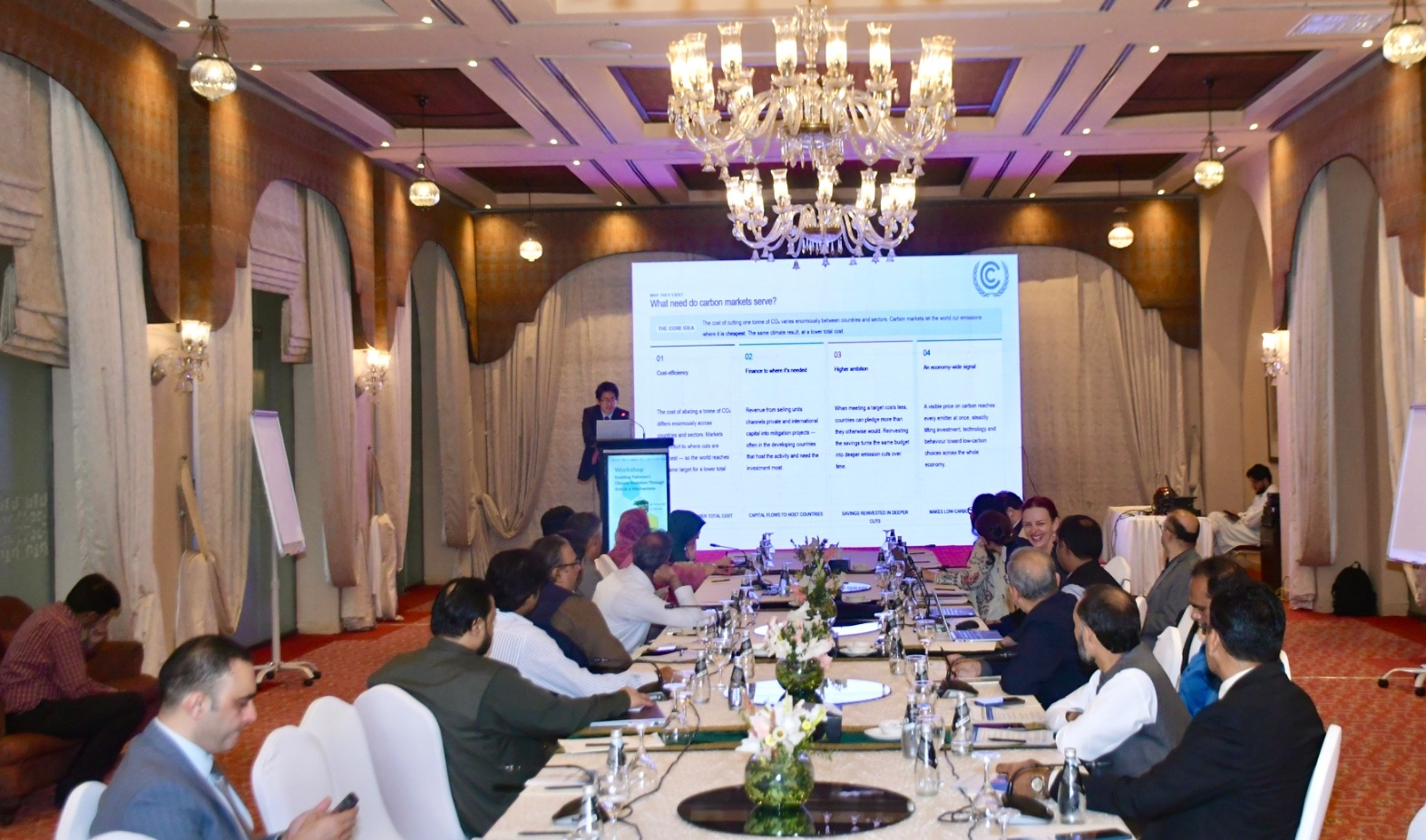
“Capacity-building is fundamental to enabling countries to participate effectively in Article 6 mechanisms. By bringing together policymakers, technical experts and practitioners, this workshop supports knowledge exchange, strengthens institutional readiness and promotes high-integrity implementation that contributes to global climate ambition under the Paris Agreement,” elaborated Zubair Shahid, Program Officer for Market, Non-Markets & Stakeholder Interaction at UNFCCC. The workshop will build participants’ understanding of both cooperative approaches under the Article 6.2 and the Article 6.4 Paris Agreement Crediting Mechanism (PACM), equipping policymakers and practitioners with the knowledge needed to navigate evolving carbon markets while ensuring environmental integrity and alignment with national climate priorities.
A central focus of the workshop is strengthening institutional capacity across government agencies responsible for climate policy, project authorization, registry development, and reporting. The participants will receive hands-on guidance on project development cycles, methodological requirements, reporting obligations, registry systems, authorization procedures and compliance processes necessary for successful participation in the Article 6 mechanisms. Manuel Moeller, SPAR6C Program Manager at GGGI, shared that the Supporting Preparedness for Article 6 Cooperation has supported Pakistan and other partner countries in building readiness needed to participate effectively in the Article 6 carbon markets.
In Pakistan, this includes strengthening technical capacities, supporting institutional preparedness and helping stakeholders explore how carbon market cooperation can mobilize climate finance while advancing national climate and sustainable development priorities. Recognizing that effective carbon markets require collaboration across and beyond the government, the workshop provides dedicated opportunities for dialogue between government institutions, private sector project developers and technical experts. Discussions will examine practical challenges facing implementation, identify solutions to regulatory and operational barriers, and encourage stronger partnerships for future Article 6 activities.
The participants will also examine evolving demand for high-integrity carbon credits, the application of sustainable development assessment tools, and the role of non-market approaches under the Article 6.8, providing a comprehensive understanding of the wider international carbon market landscape. Denis Machnik, Senior Advisor for Carbon Markets at UNEP-CC and SPAR6C Pakistan work package lead, shared that the project has been helping develop the country’s carbon project pipeline via technical assistance such as the development of a landmark methane capture and carbon market pilot project at the Lakhodair Landfill in Lahore, managed in collaboration with the Lahore Waste Management Company (LWMC), the initiative aims to reduce emissions and access to carbon finance.
“The Lakhodair Landfill project serves as a key carbon-reduction blueprint for Pakistan’s waste sector and through technical workshops such as this one, we are equipping more project developers with the tools and knowledge to leverage carbon markets for climate finance while building towards a thriving carbon ecosystem on the private and policy side as well,” he said. Beyond technical training, the workshop seeks to establish a shared understanding among key national stakeholders, laying foundations for coordinated implementation across federal and provincial institutions.
By strengthening technical expertise and institutional readiness, the workshop contributes to Pakistan’s broader efforts to access climate finance, accelerate sustainable development and enhance the implementation of its Nationally Determined Contributions under the Paris Agreement. As the workshop concludes, the participants will identify priority next steps, ongoing support needs and opportunities for continued collaboration, helping to ensure that the knowledge gained translates into practical action and long-term institutional capacity.