

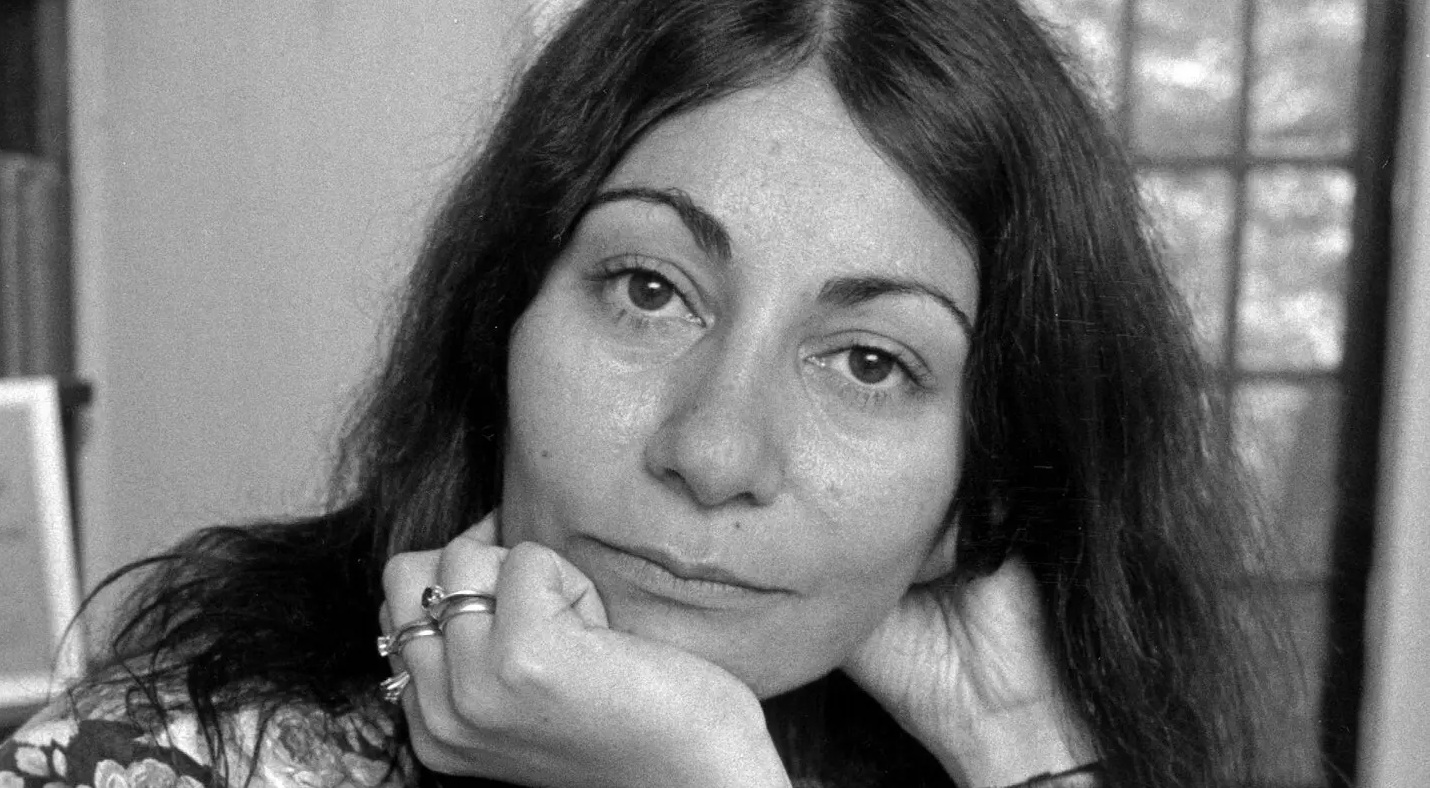
Some books are about people, and some are about places. Then there are meander books that begin with a person and, almost imperceptibly, become about everything we have ever loved that was complicated enough to hurt us. Sara Suleri Goodyear’s Boys Will Be Boys: A Daughter’s Elegy, published by the University of Chicago Press in 2003, appears at first to be an elegy for her father, ZA Suleri—known affectionately, and perhaps somewhat ironically, as Pip. Moving between Suleri’s childhood and early adulthood in post-partition Pakistan and her later life in the United States, it slips between the intimate and the historical, the domestic and the political. But it is difficult to finish the book believing it is only about a father. Perhaps that is its quiet genius.
It is about what happens when the person who gave you a sense of home is also someone you needed to escape from. It is about loving someone who could be affectionate and overbearing, charismatic and infuriating, generous and deeply unfair. It is about the peculiar mathematics of grief, where adding up the wounds does not necessarily subtract the love. Pip was a formidable public figure: a political journalist, an agitator against British rule, a founder of newspapers, an editor, a political antagonist, and briefly a director of Pakistan’s military intelligence service. To his daughter, however, he was also simply her father—the man who demanded loyalty, interfered in his children’s lives, read their diaries, and could be both loving and oppressive.
Suleri does not attempt to tidy this contradiction. She does not turn her father into a saint simply because he is dead, nor a villain simply because he hurt her. She allows him to remain inconveniently human. There is a line in the book that feels like the keyhole through which the entire memoir can be viewed. Pip tells his daughter that on Judgment Day he will say to God: “Be merciful, for I have already been judged by my child.” It is funny, theatrical, and very Pip. But beneath the humor is something almost unbearably tender: the awareness that the people whose approval matters most to us are often the people who know precisely where we have failed.
A child sees the parent without the protection of mythology. And yet, somehow, love survives being told the truth. That is what stays with you: the way love survives resentment and loss. We are often taught to imagine love too cleanly—that if we love something, we must defend it; if we resent something, we must leave it; if something has hurt us, we must sever ourselves from it. But real life is rarely so obliging. Sometimes the very thing that gave us our identity slowly consumes it, and when it is finally gone, we discover our anger did not mean we wanted to live without it. That is where Boys Will Be Boys quietly grows beyond the father-daughter relationship. Most of us have a Pip—not literally, but metaphorically.
Imagine the doctor who spent fifteen years becoming a physician: the anatomy books stacked beside their bed, the fluorescent hospital corridor at three in the morning, the pride of the first time someone called them “doctor,” and the eventual ache of a body worn down by a calling. They may complain about medicine for years, but if asked to imagine themselves without it, they find themselves staring into a void. The thing that exhausted them also gave them a name…an identity. Or imagine the entrepreneur who built a business from a borrowed office and a single employee. The first profit gives way to years of answering calls at dinner, the phone glowing beside the bed, and children growing up while office lights remain on.
The business flourishes, but the thing built to give everyone a better life becomes the thing that cost them the most of it. When walking away, is the feeling relief or bereavement? We do not only inherit people; we inherit identities, expectations, institutions, and countries. Sometimes our relationship with these structures becomes so tangled that leaving them feels simultaneously like freedom and betrayal. This is where reading Suleri through the lens of modern Pakistan becomes particularly resonant. The Pakistan of Boys Will Be Boys belongs to the post-partition generation: a young country still defining itself, carrying the wounds and ambitions of 1947, negotiating between inherited traditions and modernity. Yet the book does not feel entirely historical. Pakistan has changed enormously—and it hasn’t.
Today in 2026, women in Pakistan go to universities, become doctors, lawyers, researchers, academics, businesspersons, entrepreneurs, journalists, and writers. They build lives their grandmothers could scarcely have imagined. And yet the same society can still pause over a girl riding a motorbike. A daughter may be encouraged to pursue higher education but criticized for coming home late; celebrated for entering medicine but questioned for wanting a life beyond prescribed boundaries. We have modernized our professions faster than our expectations, changing the vocabulary of empowerment faster than the architecture of freedom. Pip feels less like a man who belonged to a ‘vanished’ era and more like an ancestor of conversations we are still having. Generations do not move in straight lines from restriction to freedom.
We are not a generation that has escaped the old world; we are negotiating with it. We are educated enough to question it, modern enough to resist it, but still deeply shaped by it. Suleri’s memoir teaches us that you can outgrow something without pretending it never made you. You can disagree with your father and still miss him; resent a profession and still mourn it; criticize a country and still feel your heart turn when you hear its anthem abroad. The book’s title becomes more poignant the longer one sits with it. Boys Will Be Boys is usually offered as an excuse—a shrug that turns behavior into inevitability. But Suleri’s memoir turns it into an epitaph. Here was a man—difficult, brilliant, contradictory. And here was a daughter who knew enough of him to be angry, and loved enough of him to mourn.
We often tell ourselves that moving forward requires an ending. That eventually, the anger fades or the debt is paid. But Boys Will Be Boys suggests a far more unsettling reality. The physician stands in the parking lot with her resignation letter in hand. The founder turns the key in the lock of the empty shopfront. The daughter sits on a plane watching the lights of Lahore disappear into the clouds. None of them are free. They are just holding their breath, waiting to see which hurts more: the staying, or the phantom limb that follows.