


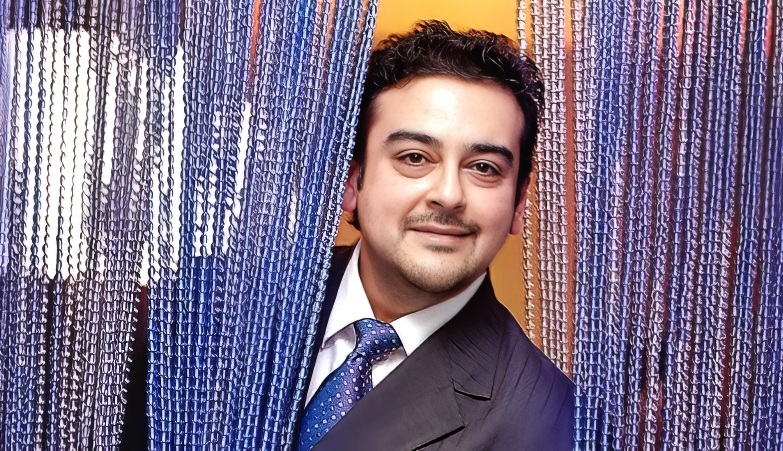
Singer Adnan Sami who is also a musician, composer, actor, and pianist, has released a new four-track musical project dedicated to Ayatollah Ali Khamenei, an Iranian politician who served as the second supreme leader from 1989 until his assassination on February 28, 2026. His 36-year tenure as the supreme leader made him the longest-serving head of a state in West Asia at the time of his death.
Adnan Sami, widely known for his crossover career spanning South Asia and the Middle East, is one of the region’s most recognized recording artists. The musician received India’s highest civilian honor in 2020 in recognition of his contribution to the arts and has earned multiple music awards throughout his career, including honors associated with MTV India. The newly-released project consists of four original compositions centered on themes of leadership, resilience and remembrance.
Adnan Sami’s most notable instrument is the piano. He has been credited as the first musician to have played the Santoor and Indian classical music on the piano. A review in the Keyboard magazine described him as the fastest keyboard player in the world and called him the keyboard discovery of the nineties. He is an accomplished concert pianist, music composer and singer with a command of Indian and Western classical and semi-classical music, jazz, rock and pop music.
The release marks a new addition to Adnan Sami’s catalog, which has historically combined elements of Indian classical music, pop and orchestral arrangements. Over a career spanning more than three decades, Adnan Sami has released commercially successful albums including Kabhi To Nazar Milao and Tera Chehra, while building an international audience through performances across Asia, Europe and the Middle East. The four-track release has attracted attention because it represents a rare instance of a globally recognized South Asian recording artist producing a multi-song tribute project dedicated to Ayatollah Khamenei.
In 1989, Ayatollah Khamenei was elected supreme leader by the Assembly of Experts. As supreme leader, he supported Iran’s nuclear program for civilian use while issuing a fatwa forbidding the production of weapons of mass destruction. He favored economic privatization of the state-owned industries and, using its oil and gas reserves, transformed Iran into an energy superpower. He played a pivotal role in shaping Iran’s military and paramilitary apparatus following the 1979 revolution, making Iran a regional power.