

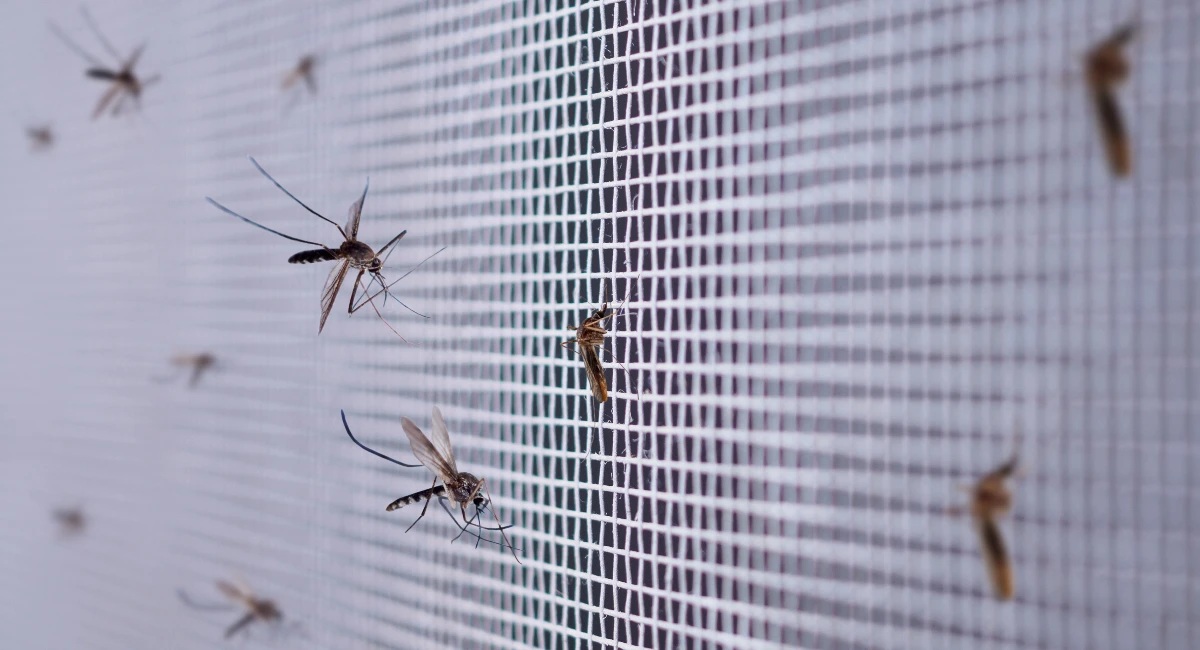
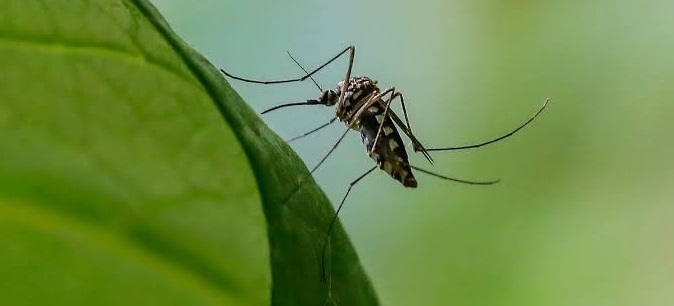
Representatives of the Aedes aegypti community addressed the presser, expressing ‘heartfelt gratitude’ to residents following what officials have described as another ‘exceptionally-successful monsoon season’. Speaking from an undisclosed puddle behind a residential building, the mosquito delegation thanked citizens for their continued partnership in what they called ‘a model public-private collaboration’.
“This year’s turnout has been phenomenal,” their spokesperson said while adjusting an improbably tiny microphone. “We simply couldn’t have achieved these numbers without the unwavering support of the human population.” Thanking the rainy season for ‘excellent’ breeding conditions, and announcing expanded operations in homes, special appreciation was extended to homeowners who ‘faithfully’ watered their plants while forgetting the saucers beneath them. Awards were also presented to:
Residents who left buckets uncovered “just for a day.”
Families storing old tires outdoors “for future use.”
Construction sites featuring complimentary rooftop swimming pools.
Households convinced mosquitoes only breed in dirty water.
Citizens who refused mosquito repellent because “it smells funny.”
“We are especially grateful,” the mosquito added, “to the ‘visionary’ individual who believes an overturned bottle cap cannot possibly become premium waterfront property.” An Aedes aegypti mosquito needs as little as a single bottle cap of clean water (approximately 5–10 mL) to lay 100–200 eggs, which can mature into biting adults in just 5–7 days, as per the Centers for Disease Control and Prevention (CDC) of the World Health Organization (WHO).
HOSPITALS REPORT PRE-TREATMENT
On the other hand, hospitals reported another familiar seasonal illness: patients arriving already halfway through treatment. “I’ve already taken two antibiotics, one anti-allergy tablet, three herbal syrups, papaya leaf extract, black seed oil, vitamin C, zinc, and my neighbor’s leftover medicine,” a patient told the doctor after reaching the hospital. “I’ve had a fever for six hours. Also, I drank a liter of goat milk because my group chat said it boosts platelets,” the patient told the doctor about ‘symptoms’.
Several medical professionals confirmed that monsoon season continues to trigger an annual epidemic of self-medication. Antibiotics are prescribed by neighbors, herbal remedies by uncles, miracle cures by WhatsApp, and medical degrees by YouTube. One physician admitted that obtaining a patient’s actual symptoms now takes considerably longer than reviewing everything they have already swallowed. About 35–50% of people who self-medicate for fever or cold symptoms take antibiotics without a prescription—despite antibiotics having no effect on viral illnesses such as dengue, according to the global health agency.
MONSOON DIAGNOSTIC FLOWCHART
To reduce confusion, authorities unveiled a simplified national diagnostic pathway. “I have a fever,” when a patient tells family, a neighbor calls it dengue, a relative term it an evil eye, but ‘forwarded as received’ will be in a family WhatsApp group. “Possible causes include dengue, malaria, Ebola, an autoimmune disorder, or a tropical virus last documented in South America,” according to the Google. “Let’s examine you first,” this will be exactly reply of a medical professional. “Why is the doctor ‘wasting’ time,” may be someone raise a question. Officials say the flowchart accurately reflects the average patient journey during the monsoon.
Encouraged by ‘continued’ public cooperation, mosquito authorities confirmed plans to expand operations into several new neighborhoods. “Our recruitment strategy remains remarkably simple,” the spokesperson explained. “We wait but the humans do the rest.” He thanked communities for faithfully maintaining flowerpot trays, uncovered water tanks, rooftop puddles, abandoned coolers and construction sites. “We’ve always believed in sustainable growth,” he said. “Fortunately, so do the humans.”
The spokesperson also praised residents who insist mosquito breeding is someone else’s responsibility. “It demonstrates tremendous confidence in decentralized mosquito housing,” he noted. Before concluding the press conference, the mosquito delegation announced the recipients of this year’s ‘Outstanding Contribution to Mosquito Welfare Awards’. The winners included:
The resident who promised to empty the bucket “tomorrow.”
The neighbor convinced dengue mosquitoes only bite “other people.”
The uncle who insisted papaya leaf juice was a substitute for medical consultation.
Whoever invented the phrase, “It’s probably just a viral.”
The audience responded with a standing ovation. Mostly because they were being bitten.
DID YOU KNOW?
The world recorded more than 14 million dengue cases in 2024—the highest annual total ever reported, compared with approximately 500,000 reported cases in 2000, according to the WHO’s Global Situation Update of 2024. In this news article, the mosquitoes are fictional, but their optimism isn’t. Every monsoon, the conditions we unknowingly create—stagnant water around homes, delayed source reduction, and self-medication—allow a preventable disease to return with remarkable consistency. Before asking about mosquitoes, perhaps the better question is: Have we ever really asked them to leave?