



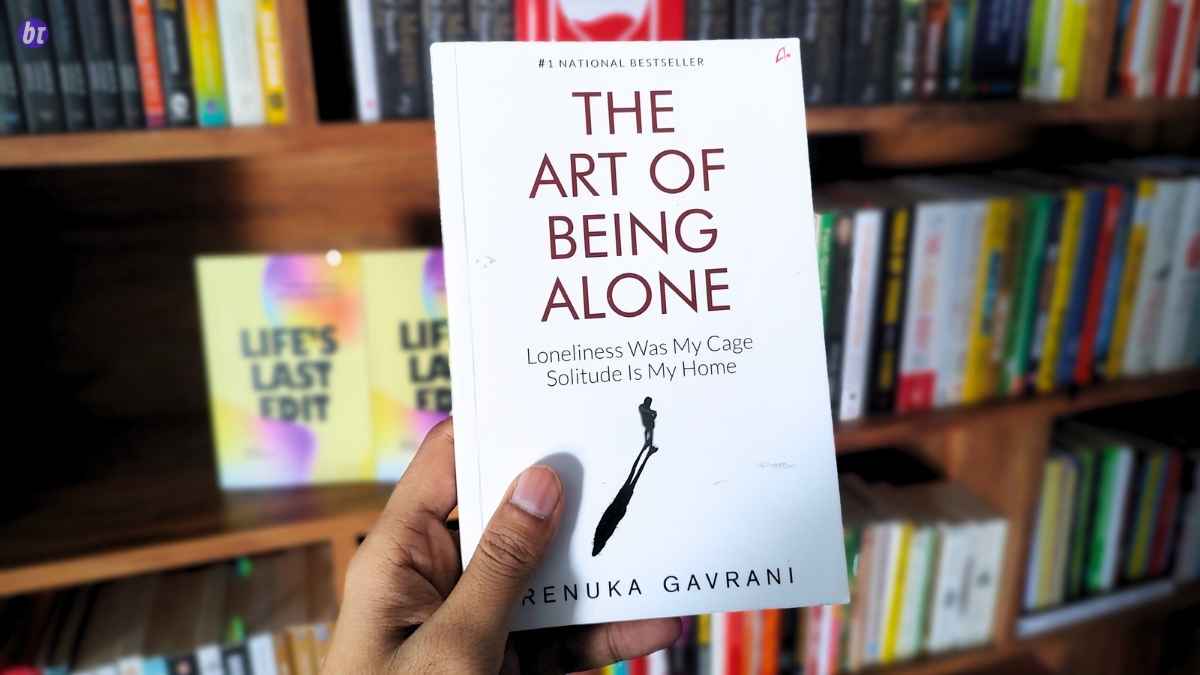
‘The Art of Being Alone’ arrives when ‘alone’ is too often mistaken for ‘lonely’; Renuka Gavrani – international best selling author – argues that solitude isn’t punishment – it’s a practice we avoid because it forces us to meet ourselves without distraction. Her approach is somehow blunt, may be conversational, and often temporal. She’s tired of us chasing ‘cheap dreams’ and ‘well-dressed’ versions of ourselves instead of asking what we actually want. Echoing American existential psychologist and author Rollo Reece May: “Many people suffer from the fear finding oneself alone, and so they don’t find themselves at all.” For readers exhausted by self-help that skirts discomfort, this book gives permission to sit with the parts of you that don’t fit into a tag.
Renuka Gavrani thesis lands early: “If there is anything that can be crueler than death, it’s nurturing false hope.” We romanticize life like a movie, waiting for a hero or soul-friend, and that ‘false’ hope makes loneliness worse. She tears down the ‘main character’ fantasy by pointing to Joey and Chandler – media warps our expectations of friendship, and we feel broken when real relationships don’t match the script. Her solution is to “imagine yourself as the ‘main character’ of a movie that hasn’t been made yet.” It risks replacing one metaphor with another, but it shifts the focus from waiting to creating. The sharper part of the book is her attack on ‘tags’.
Labels like ‘good daughter,’ ‘successful writer,’ or ‘ugly’ are collected from the society until we lose the authentic self. Her point is simple: babies don’t judge skin color or bank balance. Judgment is learned, not innate. The writer is at her best when self-aware and candid – she calls herself ‘selfish’, the world ‘full of clowns,’ and tells readers to be undefined rather than settle for “Renuka is a great author.” Her most useful advice is also the unglamorous: make a list of who you are not, then stick to it. That’s how you stop accepting the bare minimum. The gap is that she doesn’t say what to do when self-exploration gets overwhelming. ‘Sit with yourself’ isn’t enough for readers dealing with trauma.
She cites Wayne Dyer: ‘You cannot be lonely if you like the person you’re alone with,’ then admits she won’t force you to believe it. Instead she tells the story of losing her college best friend after a 15-day illness – a friend who replaced her in two weeks. That wound gives weight to her harsh claim: “You are on your own now. Except for you, no one is going to stay by your side forever.” Adulthood, she says, means accepting that people need ‘a few breaths to inhale in silence.’ Her solution isn’t isolation; but self-sufficiency: create enough space in your heart for yourself so solitude feels safe, and other people feel like a bonus.
Gradually she moves from diagnosis to prescription. Solitude, she argues, breeds creation: ‘the mind is sharper in seclusion,’ and ‘focus is a new luxury.’ We’re quick to give motivational speeches to others but terrible at supporting ourselves. Her reframe is simple: stop calling it loneliness and make your goals your ‘new best bud.’ The writer calls us ‘clowns’ for chasing the same checklist of success – Chanel bags, Italy trips, Eiffel Tower proposals – not because we want it, but because we fear looking ‘poor, stupid, or weird.’ It’s abrasive, but honest. She pushes: if you say you want $10k/month, how much do you actually need to feel at peace?
Solitude is the antidote because only when you’re alone with ‘one mind, one opinion’ you can figure out what your soul truly desires. Her homework is practical: list five things you hate about your life and ask why you want to change. Without knowing what you don’t like, self-improvement is just noise. The book’s most usable advice is to not fix everything at once. Pick one big issue and attach one daily action. She proves it with her own writing streak – one article every day, not to go viral, but to prove she could. ‘Everyone likes to work differently,’ she says, and making it fun is the only way it sticks.
Time drags when you’re with people who offer nothing, so it drags when you’re with yourself for the same reason. Renuka Gavrani’s fix is to build small sources of joy – evening walks, learning something new for 15 minutes, feeding your brain with books. She used to hate reading until The Monk Who Sold His Ferrari changed that. She gives you a way to actually like your own company. She admits her fantasy – sleepovers, movie nights, city-hopping with friends – never matched adulthood. So she stopped waiting, and started giving herself solo dinner dates and monthly picnics with her Kindle. The metaphor that defines the book: the world is a dinner party where you have to serve yourself. If you don’t, you’ll starve.
After tearing down illusions, she tells you to build something for yourself – alone. This book is for 20s and 30s readers tired of pretending they they’re fine alone but secretly hating it. If you’re stuck between ‘I should love myself’ and ‘I don’t know how,’ this feels like an honest friend. It’s not for readers who want gentle affirmations; it’s for people ready to know that their loneliness might be self-created – and willing to do something about it. The writer’s strength is her voice. She doesn’t romanticize solitude, she dismantles it. Her stories make the advice feel earned. But the tone can backfire. Calling everyone ‘clowns’ is harsh, and ‘toughen up’ isn’t a strategy for depression or burnout.
The book also assumes you have time and money for solo dinner dates – a luxury not everyone has. It doesn’t offer much for readers whose solitude might be forced by circumstance, not by choice. Despite that, if you’re ready to stop waiting for other people to fix your loneliness and start building a life you don’t need to escape from, The Art of Being Alone’s bluntness might be exactly what you need. It may seem too aggressive – but it’s also honest, and honesty is something most self-help avoids.