
Dr Ayesha Habib calls Community Health and Wellness Fair serves as a gentle reminder to social science researchers that research carries an ethical obligation — to create spaces of reciprocity, dignity and care
A Community Health and Wellness Fair was organized by a Kashmiri academic pursuing PhD in a Malaysian university as part of her ongoing research on identity and traditional healing practices among displaced Kashmiris from occupied parts of the state residing in camps across Azad Jammu and Kashmir.
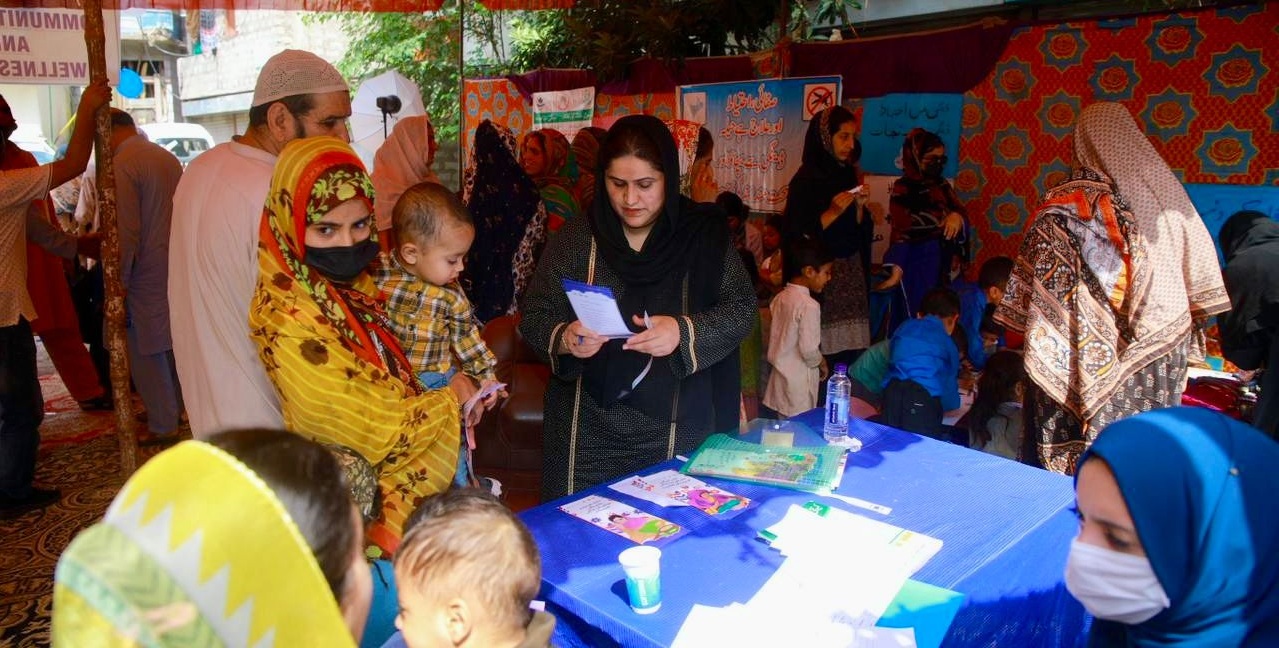
Held at the Kashmir Refugee Camp in Muzaffarabad, the event drew wide participation from men, women and children, turning the otherwise modest community space into a vibrant centre of learning, dialogue and care. The initiative of Ayesha Habib, a lecturer at the University of Azad Jammu and Kashmir (UAJK) and a PhD scholar at Universiti Sains Malaysia (USM), was supported through collaboration with the Refugee Management Cell (RMC) and the AJK Rehabilitation Department, while the Directorate of Health Services and the UN World Food Program (UNWFP) extended technical assistance and free health services to the refugee population.
The fair focused on promoting public health awareness — particularly on dengue prevention, maternal and child nutrition, and general wellness — in a context where displacement often compounds vulnerabilities to disease and mental stress. Dr Ayesha Habib engaged the children through quizzes, drawing competitions and an interactive dengue awareness session that blended playfulness with purpose. Health workers from the Health Department conducted free dengue screenings, while UNWFP professionals assessed the nutritional status of children and pregnant women. A doctor from AIMS offered culturally sensitive consultations for women, providing advice on reproductive health and hygiene in a private, respectful setting.

Adding a cultural dimension, a local faith healer joined the event to offer traditional and spiritual guidance, symbolizing the community’s enduring belief in combining prayer with medicine as part of a holistic approach to healing. The event led to a pledge by the refugee community that they would uphold hygiene practices, prevent disease and take collective responsibility for a healthier living environment. Participants of all ages, including elders who shared their memories of resilience, underscored that the pursuit of health was inseparable from the pursuit of dignity.
For Dr Ayesha Habib, the fair was more than an academic exercise. It served as a gentle reminder to social science researchers that research carries an ethical obligation — to create spaces of reciprocity, dignity and care, even within displacement. By bridging empirical study with empathy, the fair reaffirmed that community engagement remains at the heart of meaningful scholarship.